
Load Requirements
Tensile strength and elastic limit must prevent yielding under operating stress.
Material Engineering
Material selection controls load capacity, fatigue life, corrosion resistance, conductivity and performance across temperature extremes.
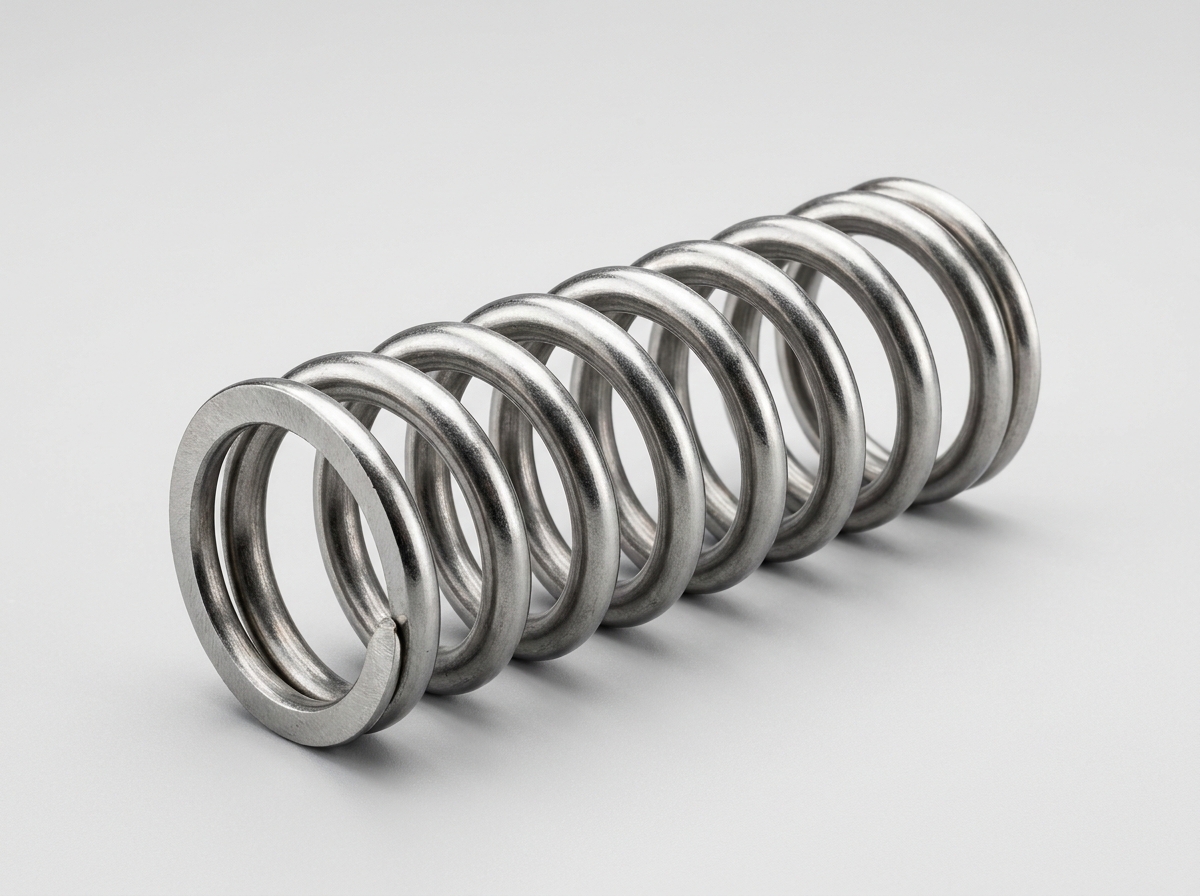
Our engineering review evaluates four primary factors when specifying wire or strip for custom manufacturing.
Tensile strength and elastic limit must prevent yielding under operating stress.
Dynamic applications require predictable cycle life without premature structural failure.
Material must withstand moisture, chemicals, salts and cleaning environments.
Properties and dimensions must remain stable across the thermal range.
Material Families
Start with the performance requirement, then compare the grades within the most suitable alloy family. This keeps material selection separate from spring type and engineering reference data.
10 MATERIALS
High-strength spring steels for economical general-purpose springs through demanding high-cycle and heavy-load components.
Best fit: General machinery, automotive, tooling, heavy-duty and high-cycle springs
Compare grades →9 MATERIALS
Stainless spring grades for corrosion resistance, cleanliness, temperature capability and high-strength precision components.
Best fit: Food equipment, medical devices, electronics, marine, chemical and precision mechanisms
Compare grades →5 MATERIALS
Copper-based spring alloys for electrical conductivity, corrosion resistance, non-magnetic behavior and precision contact components.
Best fit: Electrical contacts, connectors, switches, relays, instruments and marine hardware
Compare grades →5 MATERIALS
Nickel-based alloys for elevated temperature, stress-relaxation resistance and aggressive corrosive service where conventional steels are not sufficient.
Best fit: Aerospace, energy, turbines, nuclear, oil & gas, chemical and high-temperature equipment
Compare grades →2 MATERIALS
Premium cobalt-containing spring alloys for exceptional fatigue, corrosion resistance, strength and critical-service applications.
Best fit: Medical, oil & gas, aerospace, deep-sea and highly loaded precision mechanisms
Compare grades →1 MATERIAL
Titanium alloys provide low density, corrosion resistance and non-magnetic behavior for spring systems where weight and environment justify specialized processing.
Best fit: Aerospace, medical, marine, motorsport and chemical applications
Compare grades →1 MATERIAL
Shape-memory alloys are specialized functional materials for superelastic or thermally activated components rather than direct substitutes for conventional Hookean spring wire.
Best fit: Medical devices, robotics, miniature actuators and thermal control mechanisms
Compare grades →Quick Comparison
Relative guidance for early selection only. Final suitability depends on grade, condition, wire or strip size, stress level, heat treatment and environment.
| Material family | Strength | Corrosion | Temperature | Conductivity |
|---|---|---|---|---|
| Carbon & Alloy Steels | High to very high | Low without coating | Low to medium | Low |
| Stainless Steel | Medium to very high | High to very high | Low to medium-high | Low |
| Copper Alloys | Medium to very high | High | Low to medium | Medium to excellent |
| Nickel & High-Temperature Alloys | High to very high | Very high to extreme | High | Low |
| Cobalt Alloys | Very high to ultra-high | Extreme | Medium-high to high | Low |
| Titanium | High | Very high | Low to medium | Low |
| Shape Memory Alloys | Application dependent | High | Defined by transformation temperature | Low |
Frequently requested materials from the manufacturing catalog. Open a material family to compare the relevant grades before specifying a final alloy.
Widely used for small springs requiring high strength under repeated loading.
View material details →Reliable corrosion resistance with several grades available for demanding environments.
View material details →Economical general-purpose material for static and moderate-cycle applications.
View material details →Recommended for high stress, shock loads and long fatigue life.
View material details →Copper alloy for electrical conductivity, corrosion resistance and elastic contact parts.
View material details →Nickel-chromium alloy for extreme temperature and corrosive service.
View material details →High-performance copper alloy for electrical contacts and precision spring parts.
View material details →Durable wire for larger diameters, cyclic loads and industrial machinery.
View material details →Engineering Data
The Materials section explains alloy selection. The Spring Engineering Guide remains the data layer for material-by-spring-type reference ranges, standards and Spring Finder configurations.
Upload your drawing, specifications or sample details for an engineering and manufacturing review.