
Applications
Where this spring style fits
Review best-fit uses, assembly constraints and situations where another spring style may be a better choice.
View application guidance →Flat Springs & Stampings
Formed strip springs and stamped parts specified by finished geometry, functional bends and any required elastic movement.

Formed flat springs and metal stampings share strip or sheet geometry, but a stamped part is not necessarily intended to act as a spring. Identify whether the component must flex repeatedly, retain another part or simply hold a fixed shape. Provide the finished form and mounting interfaces. For an elastic function, specify the force and displacement at the relevant contact rather than relying only on a flat blank drawing.
Use the cantilever page for a defined fixed-end bending function, or spring clips for a retention interface. This broader page is appropriate when the formed geometry and stamped features need to be established first.
Specify which dimensions are controlled after forming and finishing. Clarify material condition, burr direction and acceptance of bend angles or spring action so the finished component, rather than the blank alone, is reviewed.
Product Specification
Use these product-specific inputs to describe your requirement. Final dimensions, material and performance are confirmed against the drawing and operating conditions.
| Specification item | What to define |
|---|---|
| Blank and section | Thickness, width or outline, cutouts and edge requirements. |
| Finished form | Bend locations, radii, angles and reference datums. |
| Mating interfaces | Mounting holes, tabs and contact positions. |
| Functional requirement | Force at deflection if elastic action is required. |
| Condition and volume | Material condition, finish, quantities and inspection priorities. |
Next Design Decisions
Once the spring style is selected, confirm how it works in the assembly, which material suits the environment, how it will be manufactured and which dimensions and performance points should be controlled on the drawing.
Applications
Review best-fit uses, assembly constraints and situations where another spring style may be a better choice.
View application guidance →Materials
Review strip grade, supplied condition and finish against bend geometry and any repeated elastic movement.
Compare spring materials →Manufacturing
Review forming, heat treatment, secondary operations, inspection and the path from first samples to repeat production.
View manufacturing capabilities →Engineering Data
Use the engineering library to review materials, sizing considerations and applicable standards for the custom design.
Open Spring Engineering Guide →Material Direction
The links below are selection guides, not a claim that every grade is suitable for every size or load.
Compare Designs
Use these alternatives when the available space, connection style, travel or force direction changes.
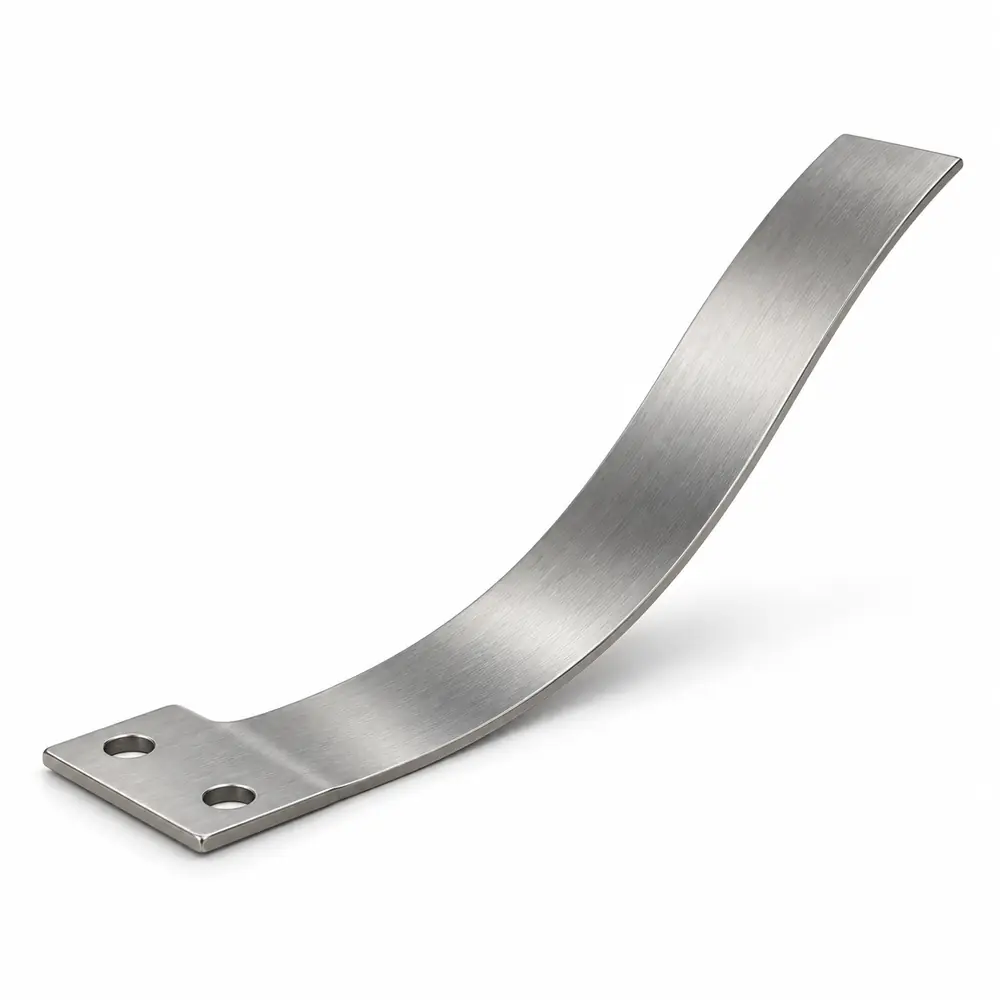
Flat Springs & Stampings
Flat spring elements fixed at one end, specified by active length, support details and force at the moving contact.
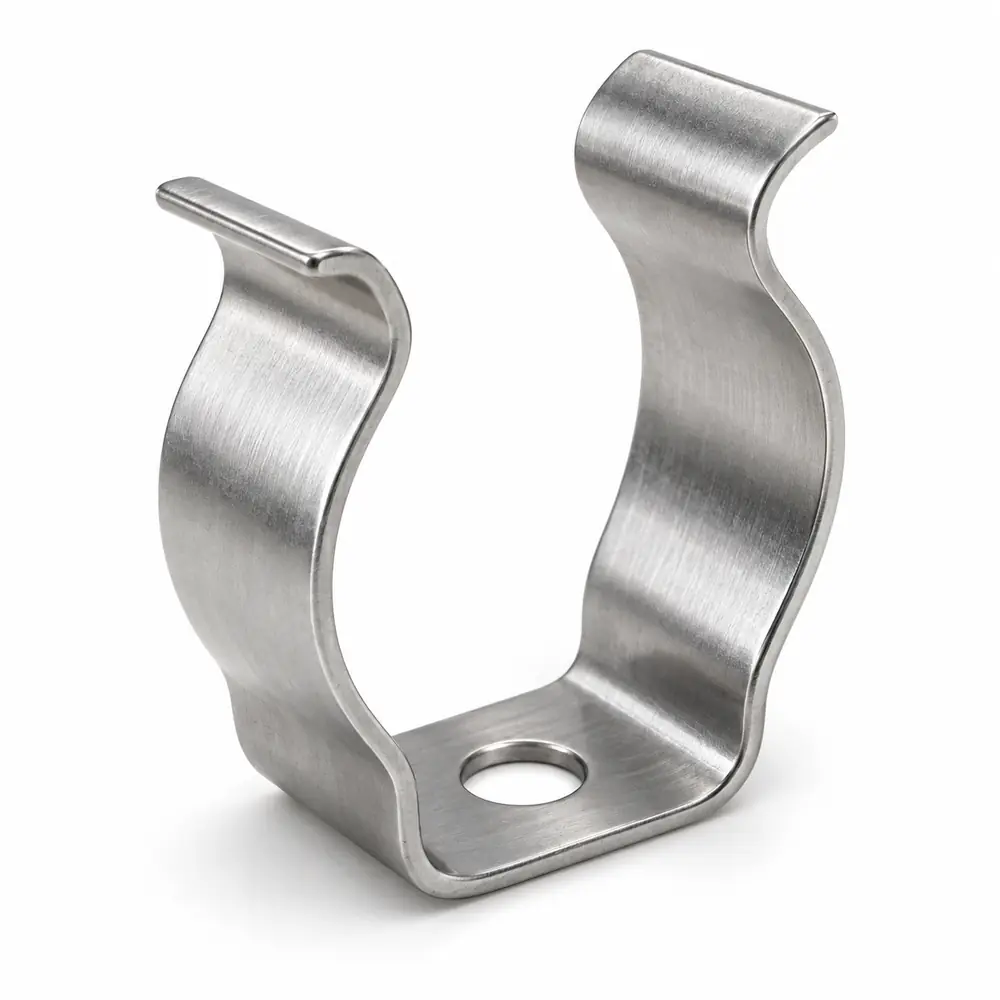
Flat Springs & Stampings
Spring clip enquiries defined by the mating part, insertion movement, retention requirement and release method.
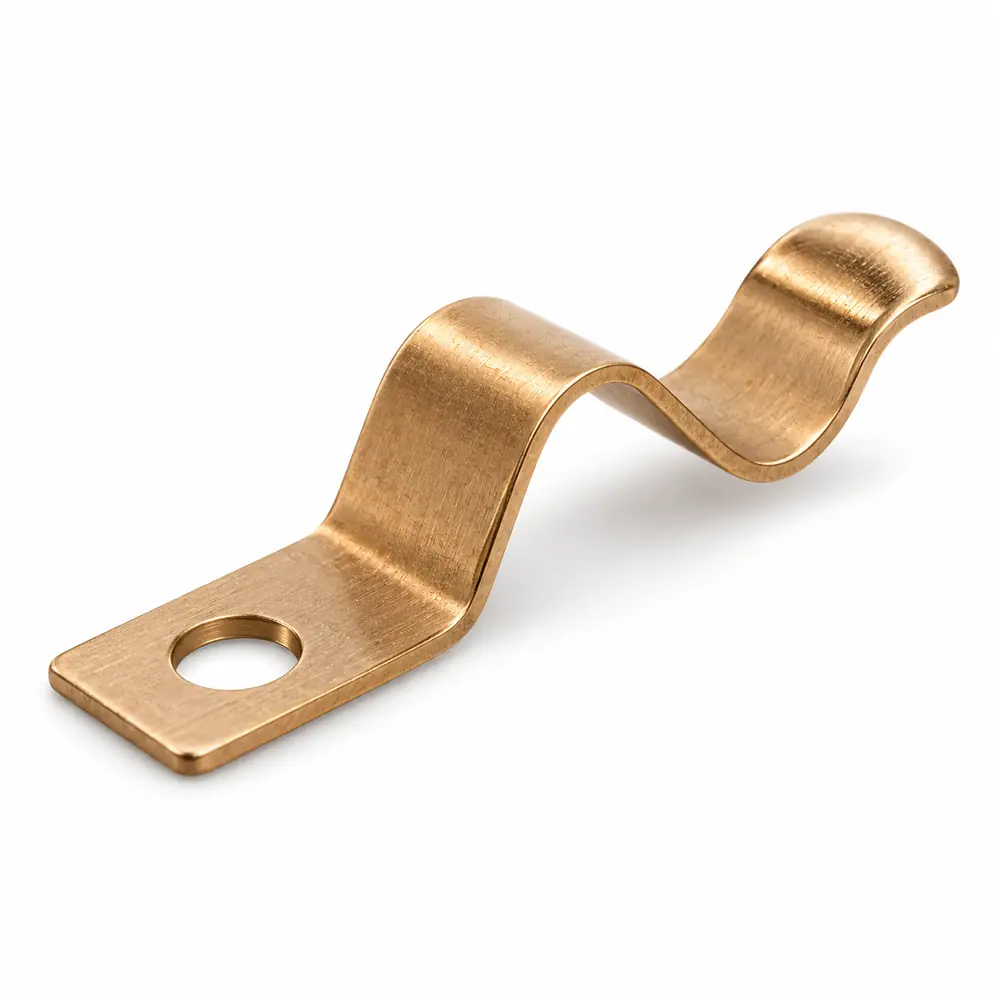
Flat Springs & Stampings
Formed leaf contacts specified by their fixed support, mating contact surface and force at installed deflection.
Product Questions
No. Some stamped parts are rigid features. State whether elastic movement is required and provide its force-deflection specification.
Include the finished bends, mounting interfaces and functional dimensions. The blank alone does not establish the assembled shape or spring action.
RFQ
A drawing is ideal. If you do not have one yet, provide the dimensions, load or torque, travel, environment and expected quantity that matter in the assembly.
CustomSprings Engineering Catalog
Send your dimensions, quantity and drawing for engineering review.