
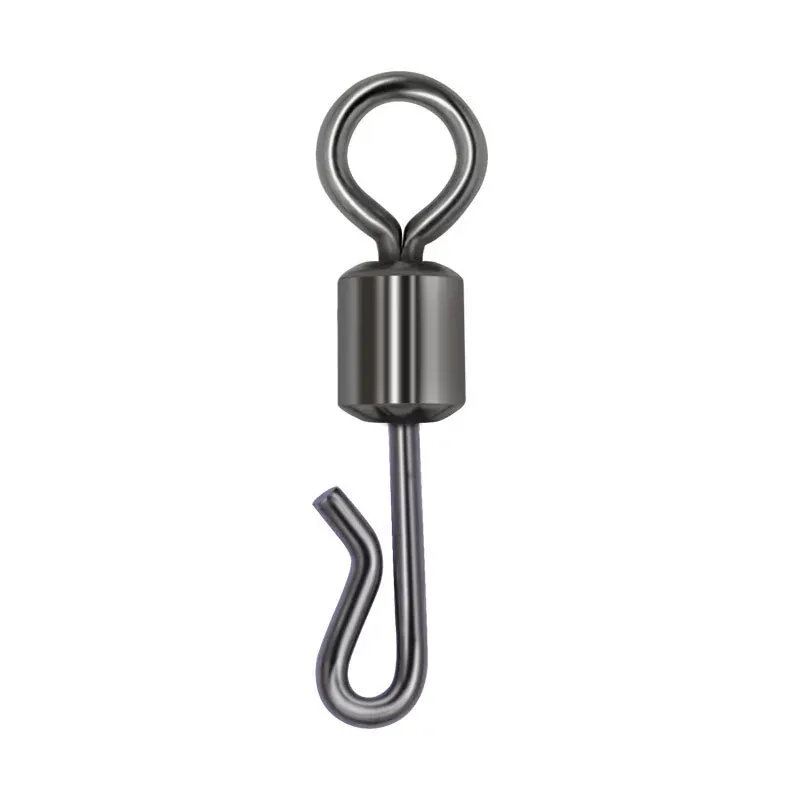
Where it earns its place
Best-Fit Uses
Quick-retention clips
Holds a part in place while allowing deliberate removal with little or no tooling.
Hooks, links and hanging points
Creates a shaped connection around a pin, eye, cable or product edge.
Locating or guiding a component
A shaped wire part can establish position, limit movement or route another component without using a machined bracket.
Creating a custom clip, hook or support
Useful when the contact points and installation path matter more than fitting the design into a standard spring category.
Why this style works here
What This Spring Style Solves
A formed wire clip or hook can create a useful connection with little material and few assembly steps when the mating hole, pin, edge or groove is clearly defined.
Before you choose it
What to Confirm in Your Assembly
- Dimension the hole, edge, pin or groove the wire contacts.
- Show insertion and removal paths and state how often the part will be serviced.
- Provide a dimensioned drawing or 3D model with bend locations and the surfaces that matter to fit.
- Mark which sections are expected to flex and which are simply structural or locating features.
- Show the assembly sequence so the finished form can actually be installed without permanent bending.
Avoid forcing the wrong spring into the design
When Another Spring Style May Fit Better
A clip that is very easy to install may also be easy to dislodge. Retention force, service-removal force and accidental snagging should be considered together.
- Retaining rings for groove-based axial loads
- Wire-formed components for more complex 3D routing
- Stamped clips for very flat high-volume parts
Keep material selection separate
Environment & Material Direction
Material and finish should be selected after the forming and flex requirements are known. Corrosion, conductivity and appearance can then be handled in the Materials section without duplicating them here.
Move from the use case to the specification
Where to Go Next
Application questions
Frequently Asked Questions
Can a wire clip be designed for repeated removal?
Yes, if its working deflection and contact surfaces are controlled. State the expected number of service cycles so the design is not based on a single-install condition.
Do all wire forms need spring-temper material?
No. Some wire forms mainly locate or support parts and see little elastic movement. The required flexibility, permanent set, corrosion resistance and forming method determine the most suitable material condition.
What should I send for an application review?
Send the assembly drawing or a clear sketch, the working positions, the force or torque you need, expected cycles, environment and quantity. If an existing spring is being replaced, include its dimensions and explain what is not working well in the current design.
Same application family