
Key Takeaways
- Spring index (C) is the ratio of mean coil diameter to wire diameter, typically between 4 and 12 for practical compression and extension springs.
- A low spring index increases stress concentration and makes coiling difficult, while a high index can cause instability and sensitivity to tolerances.
- Spring index directly influences the Wahl factor and spring rate, making it a key input for any spring design calculation.
- Before calculating spring index, gather dimensions, material properties, load, travel, cycle life, and environmental conditions.
- When spring index falls outside common ranges or fatigue is a concern, engineering confirmation is required to ensure a reliable design.
How do you know if a custom spring will be easy to manufacture or prone to failure? The answer often starts with a single number: the spring index. This ratio of mean coil diameter to wire diameter is the first checkpoint in spring_design_calculation and a critical factor in whether your design is practical, durable, and cost-effective.
What Is Spring Index and Why It Matters
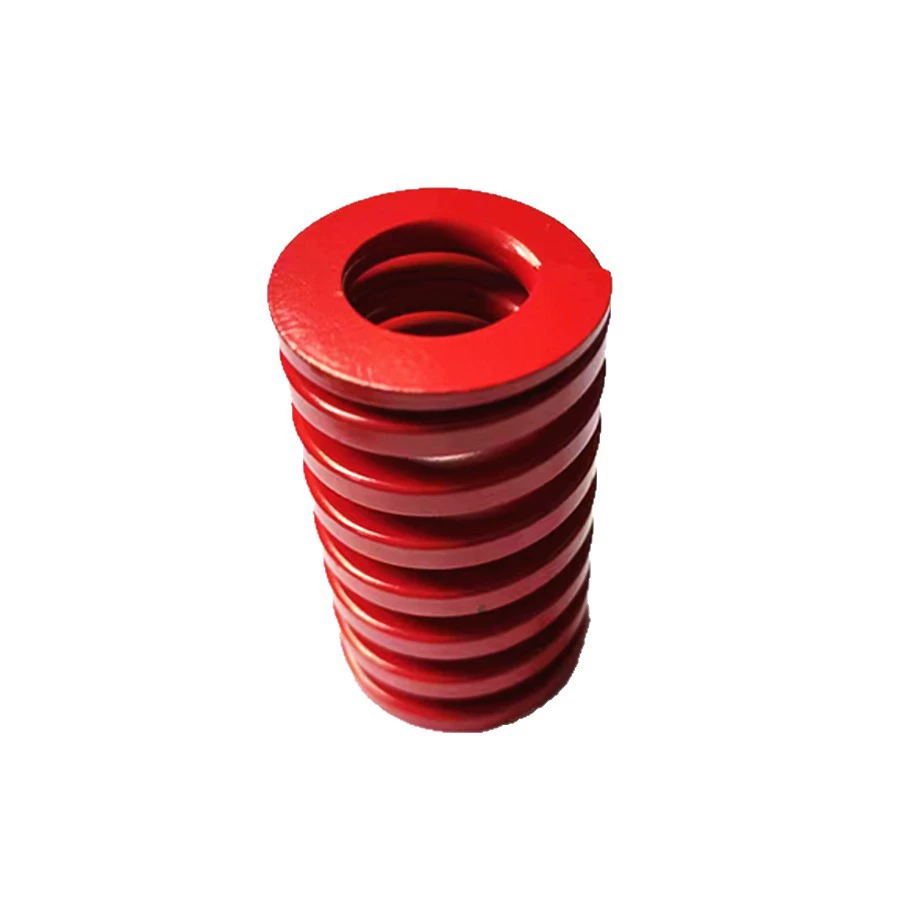
Spring index (C) is the ratio of a spring’s mean coil diameter (D) to its wire diameter (d). The mean coil diameter is the average of the outside and inside diameters. In formula form: C = D/d. This simple ratio tells you how tightly the wire is coiled relative to its thickness. A low index means a tightly wound spring with large wire; a high index means a loosely wound spring with thin wire.
Why does this matter? Spring index directly influences stress concentration, manufacturability, and spring rate. For compression and extension springs, a moderate index—typically between 4 and 12—balances these factors. Below 4, the spring is difficult to coil and stresses concentrate on the inside of the coil, increasing failure risk. Above 12, the spring may be too flimsy, tangle easily, and be sensitive to dimensional variations. For torsion springs, the index also affects the bending stress and the amount of angular deflection achievable.
Understanding spring index helps you avoid common pitfalls in custom spring design. It guides material selection, wire diameter choices, and coil count. It also informs whether you need a standard compression spring or a more specialized type like a wave spring or constant force spring.
Key Formulas and Engineering Relationships
Spring index is not just a standalone number; it feeds into other calculations. The most important is the stress correction factor, which accounts for the curvature of the coil. The Wahl factor (Kw) is commonly used: Kw = (4C – 1)/(4C – 4) + 0.615/C. This factor increases the effective stress on the inner coil surface, especially at low indices. For a given load, a lower index results in higher stress.
Spring rate (k) for a compression spring is calculated as k = Gd^4 / (8D^3 N), where G is the shear modulus of the material, d is wire diameter, D is mean coil diameter, and N is the number of active coils. Notice how D and d appear: the index C = D/d is embedded in this relationship. A small change in wire diameter or coil diameter can significantly alter the rate. For extension springs, the initial tension adds another variable, but the index still governs stress and manufacturability.
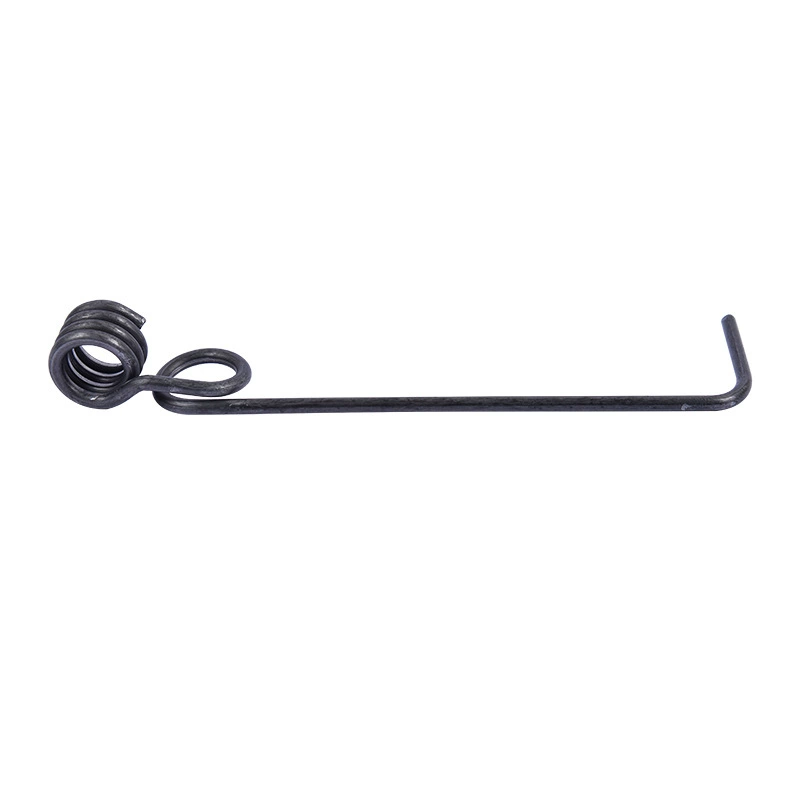
For torsion springs, the bending stress is calculated using the spring index and the angular deflection. The formula for stress is σ = (32M) / (πd^3) * K, where M is the moment and K is a stress correction factor similar to the Wahl factor. Again, a moderate index keeps stress within safe limits for the material.
These formulas are tools for estimation, not a substitute for engineering confirmation. Exact values depend on your specific dimensions, material properties, and operating conditions. Always verify with a spring design calculation or consult a spring engineer.
Inputs You Need Before Calculating Spring Index
Before you can calculate spring index or use it to evaluate a design, you need to gather several inputs. Missing any of these can lead to an inaccurate calculation and a spring that doesn’t perform as expected.
- Dimensions: Wire diameter (d), outside diameter (OD), inside diameter (ID), free length, and number of coils. From these, you derive mean diameter D = (OD + ID)/2.
- Material: The shear modulus (G) and allowable stress vary by material. Common options include music wire, stainless steel 302, 17-7 PH, and chrome silicon. Each has different fatigue and corrosion properties.
- Load and Deflection: The force the spring must exert at a given deflection, or the deflection required at a given load. This determines the required spring rate.
- Travel: The total distance the spring will compress or extend during operation. This affects solid height and stress range.
- Cycle Life: The number of cycles expected. Fatigue life is highly sensitive to stress, which is influenced by spring index.
- Environment: Temperature, corrosion, and space constraints. These may dictate material selection and surface treatments.
Without these inputs, any calculation is a guess. For a reliable design, document each parameter and consider tolerances. If you need help gathering data, refer to our Spring Guide or use our RFQ form to discuss your application with an engineer.
Design Trade-offs and Warning Signs
Spring index involves trade-offs. A low index (tightly coiled) gives a higher spring rate for a given wire size and space, but it increases stress concentration and makes coiling difficult. It may also require special tooling, raising cost. A high index (loosely coiled) reduces stress but can lead to tangling, buckling, and excessive sensitivity to dimensional tolerances. It may also result in a spring that is too soft for the application.
Warning signs that your spring index is problematic include:
- Index below 4: High risk of tool marks, cracking during coiling, and premature fatigue failure.
- Index above 12: Spring may be unstable, tangle during handling, and have poor load accuracy.
- Index near the limits: Even if theoretically possible, manufacturing variability may cause performance issues.
- Insufficient clearance: If the spring must fit over a rod or inside a bore, the index affects the required clearances.
Other trade-offs include material choice. For example, stainless steel may be required for corrosion resistance, but it has a lower shear modulus than music wire, affecting rate and stress. Similarly, a torsion spring with a low index may achieve high torque but at the cost of increased stress and reduced cycle life.
When to Use the Spring Guide, Calculators, or Reference Data
Spring index is just one part of a larger design puzzle. When you need to go beyond a rough estimate, turn to our reference data and Spring Guide. These resources provide material properties, standard sizes, and design equations. For quick checks, online calculators can help, but they rely on the inputs you provide. If your application involves fatigue, impact, or extreme temperatures, engineering confirmation is required.
Our Spring Guide covers topics like stress correction, material selection, and tolerances. It can help you interpret your calculations and avoid common mistakes. For specific spring types, such as wave springs or constant force springs, the design considerations differ. In those cases, review the relevant category pages and consult with our engineers.
Preparing Data for a Custom Spring Design or RFQ
When you are ready to request a custom spring, having your data organized speeds up the process and ensures accurate quoting. Here is what to prepare:
- Application description: What the spring does, where it fits, and how it moves.
- Dimensions: Wire diameter, outside diameter, inside diameter, free length, and number of coils. If you have a target spring index, include it.
- Load and deflection: Required load at one or more points, or required deflection at a given load.
- Cycle life: Expected number of cycles and whether fatigue is a concern.
- Environment: Temperature range, corrosive agents, and any space limitations.
- Material preference: If you have one, or ask for recommendations.
- End configurations: For compression springs, closed and ground, open, or closed not ground. For extension springs, hook type. For torsion springs, leg shape.
- Tolerances: Any critical dimensions that must be held tightly.
Providing this information allows our engineers to review your design, suggest improvements, and provide a quote. If you are unsure about any parameter, note it and we can help. Use our RFQ form to submit your requirements.
| Aspect | Details |
|---|---|
| Definition | Spring index (C) = mean coil diameter (D) / wire diameter (d) |
| Typical Range | 4 to 12 for most compression and extension springs |
| Key Formulas | Wahl factor, spring rate, stress calculations |
| Required Inputs | Dimensions, material, load, travel, cycle life, environment |
| Trade-offs | Low index: high stress, difficult to coil; high index: unstable, sensitive to tolerances |
| When to Seek Help | Fatigue, extreme environments, or when index is near limits |
| RFQ Preparation | Application, dimensions, loads, cycle life, environment, material, end config, tolerances |
Spring index is a fundamental concept that every engineer designing custom springs should understand. It influences stress, manufacturability, and performance. By calculating it early and considering the trade-offs, you can avoid costly redesigns. When in doubt, our engineering team is ready to review your drawings and provide feedback. Submit a drawing or RFQ to get started.
Frequently Asked Questions
What is a good spring index for a compression spring?
A spring index between 4 and 12 is generally considered practical for compression springs. This range balances manufacturability, stress distribution, and stability. Values below 4 can cause high stress and tooling issues, while values above 12 may lead to tangling and poor load control.
How does spring index affect spring rate?
Spring rate is proportional to the fourth power of wire diameter and inversely proportional to the cube of mean coil diameter. Since spring index is the ratio of mean diameter to wire diameter, a change in index directly alters the rate. A lower index (thicker wire relative to coil diameter) typically yields a higher rate for the same number of coils.
Can I use spring index for torsion springs?
Yes, spring index is relevant for torsion springs as well. It affects the bending stress and the stress correction factor. A moderate index helps keep stress within safe limits and allows for reasonable angular deflection. However, torsion springs have additional design considerations such as leg configuration and wind direction.
What happens if my spring index is too low?
A spring index below 4 can cause excessive stress concentration on the inner coil, leading to premature fatigue failure. It also makes the spring difficult to coil, potentially causing tool marks or cracks. In some cases, special manufacturing processes may be required, which can increase cost and lead time.
How do I calculate spring index if I only know outside diameter?
If you know the outside diameter (OD) and wire diameter (d), you can calculate the mean coil diameter as D = OD – d. Then spring index C = D/d. Alternatively, if you know inside diameter (ID), D = ID + d. Always use consistent units.