
Applications
Where this spring style fits
Review best-fit uses, assembly constraints and situations where another spring style may be a better choice.
View application guidance →Compression Springs
Compression springs made from rectangular-section wire, specified by section width, thickness, winding orientation and working load.
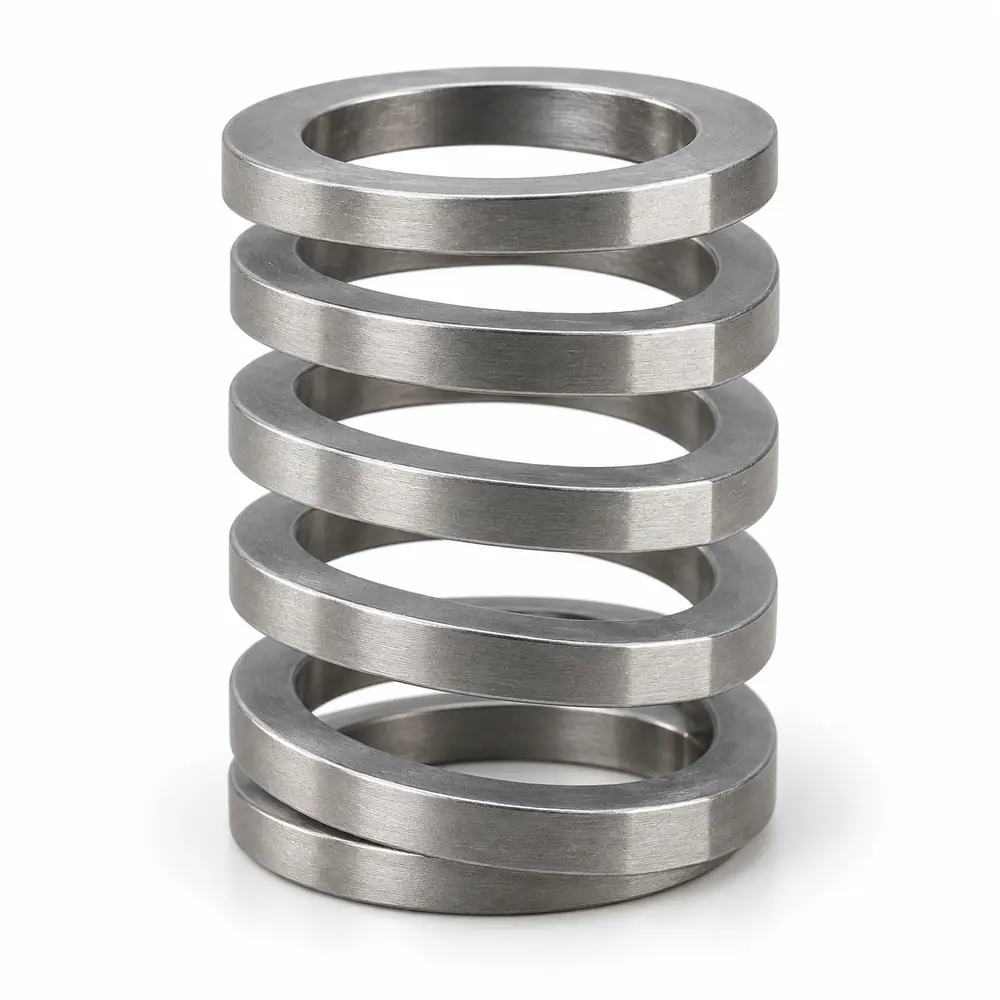
Rectangular-wire compression springs are identified by the cross-section of the material, not by a rectangular outline of the finished coil. Both section dimensions and their orientation around the coil must be stated. A round-wire calculation cannot simply be reused for a rectangular section. Compare candidate geometries against the required force, installed height and available bore or guide clearance.
A square section has equal side dimensions; a rectangular section has separately defined width and thickness. An oval or rectangular coil body may still use round wire, so specify body shape and wire section as separate features.
Agree which section and body dimensions are controlled after forming. For acceptance, define working load points and seating conditions instead of assuming equivalence with a round-wire spring of similar area.
Product Specification
Use these product-specific inputs to describe your requirement. Final dimensions, material and performance are confirmed against the drawing and operating conditions.
| Specification item | What to define |
|---|---|
| Wire section | Width, thickness, corner condition and section tolerances. |
| Orientation | Section orientation and winding direction on a drawing. |
| Body envelope | Inside and outside dimensions, guide and bore clearance. |
| Load and stroke | Forces at working heights and minimum operating height. |
| Ends and material | End geometry, material condition and finish requirement. |
Next Design Decisions
Once the spring style is selected, confirm how it works in the assembly, which material suits the environment, how it will be manufactured and which dimensions and performance points should be controlled on the drawing.
Applications
Review best-fit uses, assembly constraints and situations where another spring style may be a better choice.
View application guidance →Materials
Consider grade, section availability, edge condition and the forming route alongside fatigue and corrosion requirements.
Compare spring materials →Manufacturing
Review forming, heat treatment, secondary operations, inspection and the path from first samples to repeat production.
View manufacturing capabilities →Engineering Data
Use the engineering library to review materials, sizing considerations and applicable standards for the custom design.
Open Spring Engineering Guide →Material Direction
The links below are selection guides, not a claim that every grade is suitable for every size or load.
Review the design and measurement requirements for this spring family.
Compare Designs
Use these alternatives when the available space, connection style, travel or force direction changes.
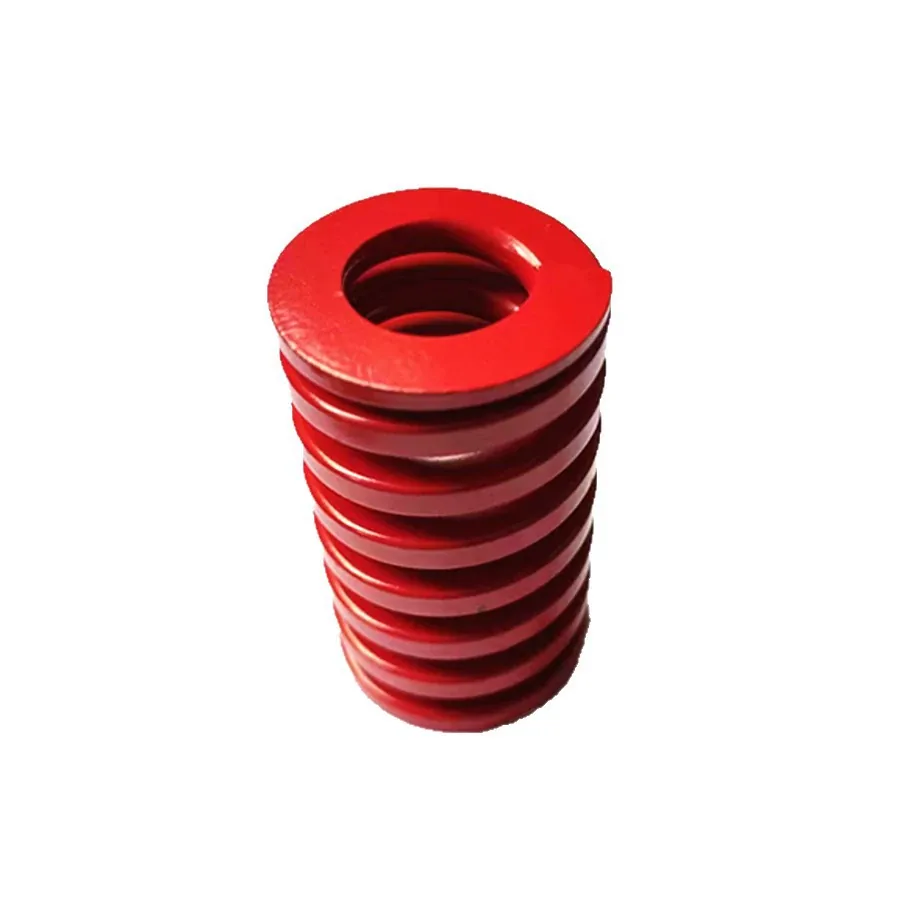
Compression Springs
Square-section compression springs defined by material side dimension, coil geometry, end form and forces at installed heights.
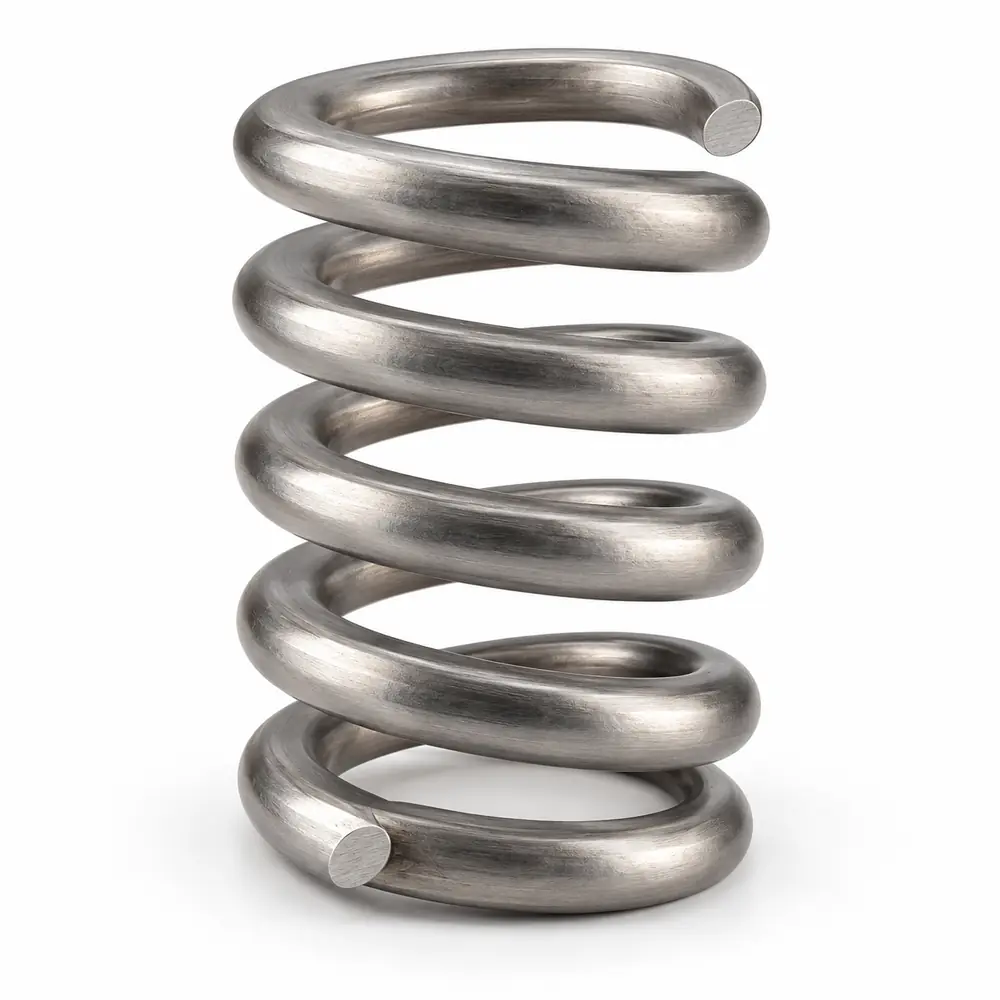
Compression Springs
Compression springs with non-standard material sections, developed from a section drawing and the required force-height specification.
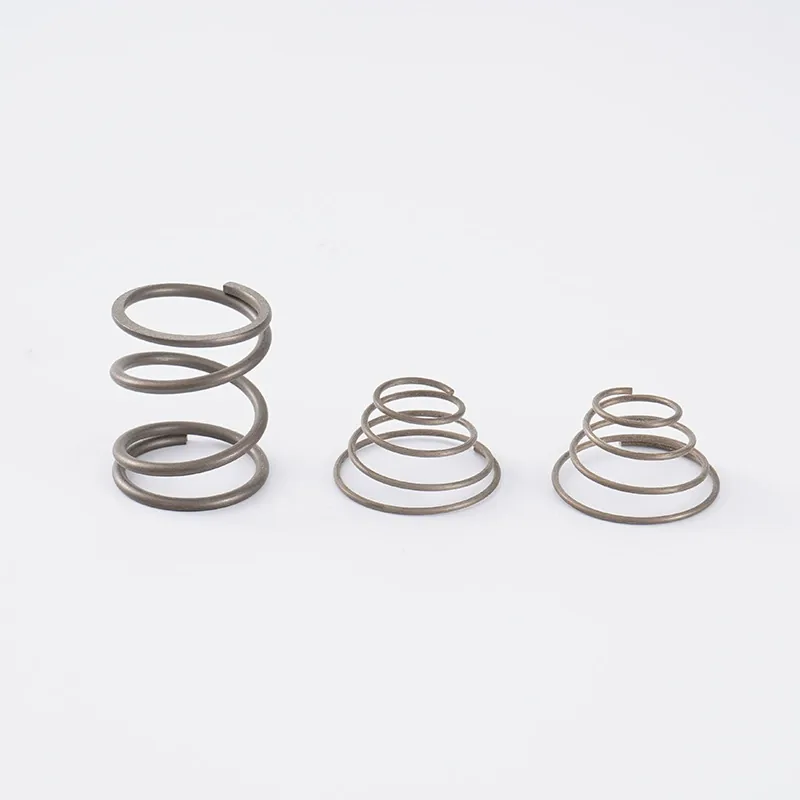
Die Springs
Heavy-duty die springs referenced to ISO 10243 duty classes for tooling, fixtures and repeated high-load compression where bore size, stroke and duty level must be matched together.
Product Questions
No. Coil-body outline and material cross-section are separate characteristics. Include a section view or width and thickness dimensions.
No. Non-round sections need a calculation appropriate to their geometry and orientation. Supply the force-height requirements for review.
RFQ
A drawing is ideal. If you do not have one yet, provide the dimensions, load or torque, travel, environment and expected quantity that matter in the assembly.
CustomSprings Engineering Catalog
Send your dimensions, quantity and drawing for engineering review.