
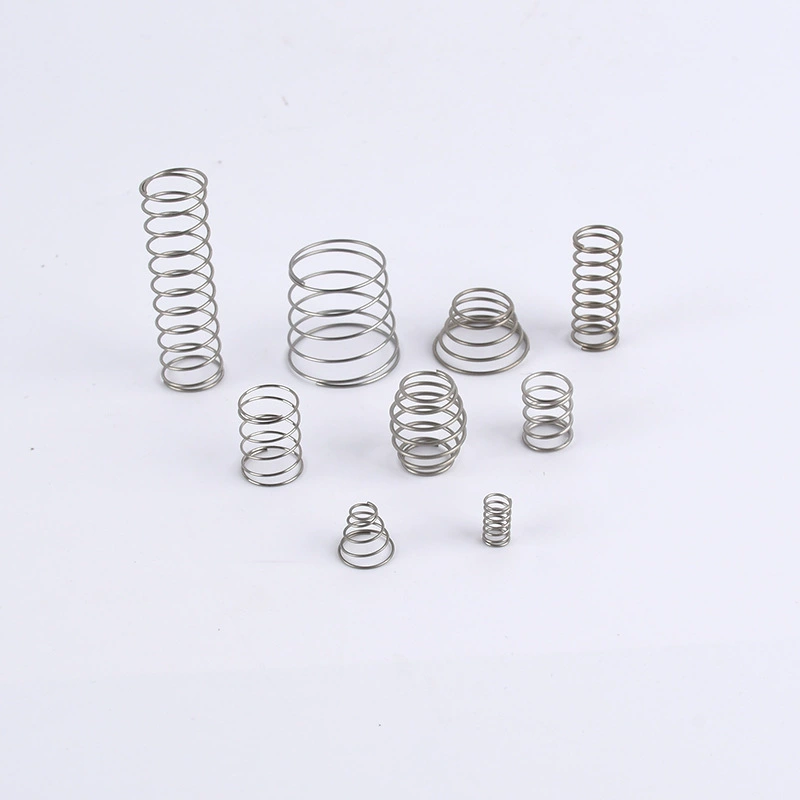
For product selection, compare Compression Springs.
Key Takeaways
- Compression spring design is iterative because wire diameter, mean coil diameter, active coils, and material modulus all interact to set rate, stress, and solid height.
- A complete compression spring calculation requires installed cavity dimensions, load at installed and maximum travel, cycle life, and environment before any rate or stress value is meaningful.
- Low spring index, small travel margin, and long free length relative to mean diameter are common warning signs that require engineering review rather than catalog substitution.
- Material family selection affects corrosion, temperature, and fatigue behavior, but final grade and allowable stress require engineering confirmation for the specific application.
- A clean custom spring RFQ includes a function statement, envelope drawing, load and travel table, cycle life, environment, and any material or finish constraints.
A maintenance engineer holds a failed compression spring from a packaging machine. The coils are tangled, the free length has shrunk, and the end coils are worn flat on one side. The drawing says only “spring, 2 in. long.” No rate, no material, no cycle count. The replacement order stalls because no one can confirm what the original spring was supposed to do. This is the everyday cost of skipping compression spring design calculation before a spring is quoted or cut.
This guide is for engineers and product designers who need to specify a custom compression spring with confidence. It explains the core relationships, the inputs required before any calculation, the trade-offs that cause field failures, and how to prepare a clean data package for a custom spring RFQ. It does not replace engineering confirmation for a specific application.
Answer-first: what compression spring design actually determines
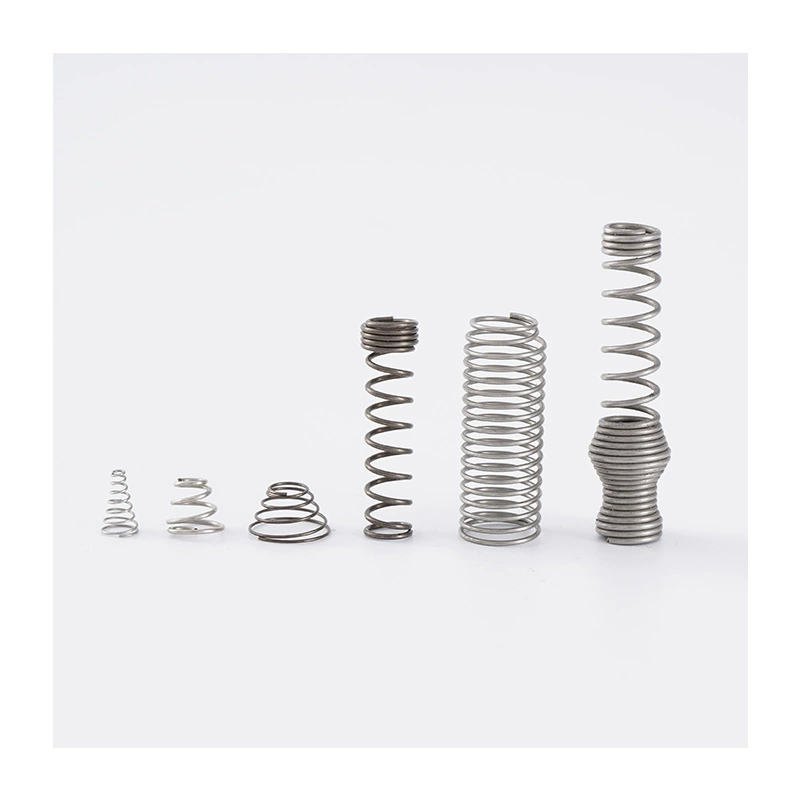
Compression spring design is the process of selecting wire size, coil diameter, free length, active coil count, end condition, and material so the spring delivers a required force at a required installed height without exceeding stress, solid height, or fatigue limits. The output is not just a spring rate. It is a set of dimensions and a material condition that survive the full travel, the environment, and the expected number of cycles.
Four variables drive almost every compression spring conversation: wire diameter, mean coil diameter, active coils, and material modulus. Change any one and the rate, stress, and solid height all move. That is why a compression spring design guide cannot give a single universal formula answer. It can only show the relationships and the data needed to close them.
For a broader orientation to spring families and terminology, the site Spring Guide and reference data pages are the right starting point before drilling into a specific compression spring calculation.
Key formulas and engineering relationships
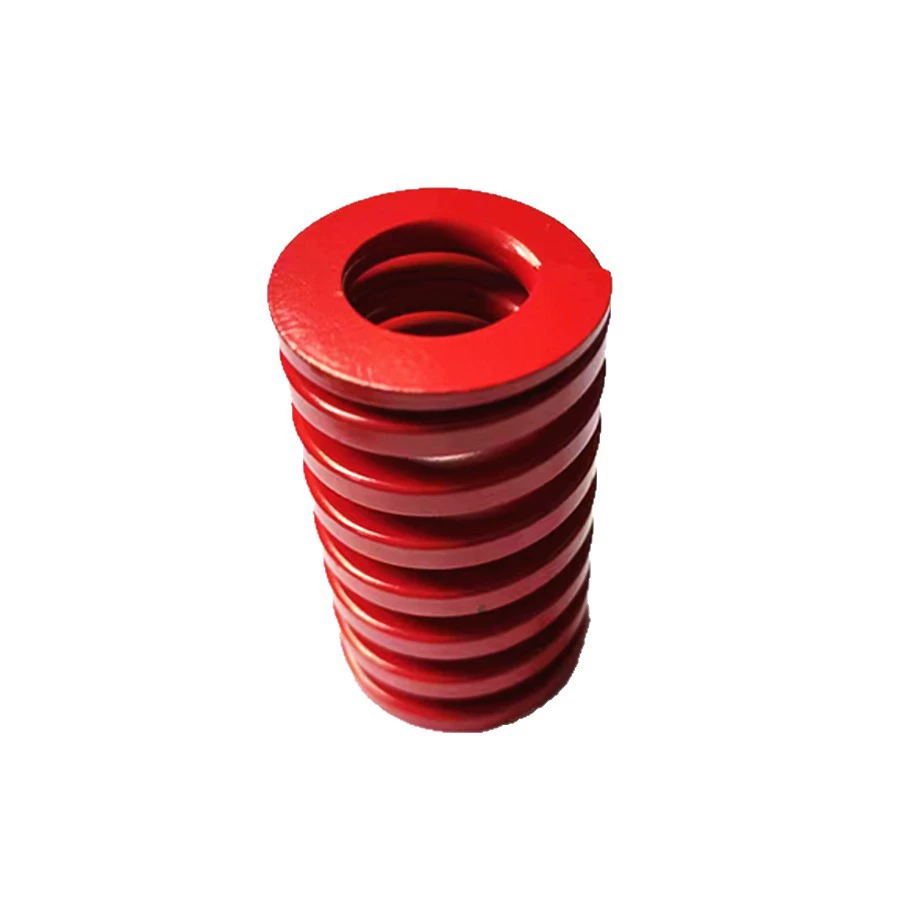
Compression spring behavior is governed by a small set of relationships. They are described here conceptually so you can sanity-check a design before requesting engineering confirmation.
- Spring rate rises with the fourth power of wire diameter and falls with the cube of mean coil diameter and the number of active coils. Small wire changes cause large rate changes.
- Deflection is the distance traveled from free length to installed or loaded height. Load equals rate times deflection for a linear spring within its working range.
- Shear stress increases with load, mean coil diameter, and a curvature correction factor that becomes more significant as the spring index (mean diameter divided by wire diameter) drops.
- Solid height is approximately the wire diameter times the total number of coils, adjusted for end coil configuration. A spring compressed to solid height sees very high stress.
- Buckling becomes a risk when free length is large relative to mean coil diameter, especially in springs guided only at the ends.
- Fatigue depends on stress range, mean stress, material, surface condition, and cycle count. It is not a single number and requires application data.
These relationships explain why a compression spring design calculation is iterative. You rarely hit the target load, fit the cavity, and stay under stress on the first pass. Exact values for a specific spring require engineering confirmation, not a generic table.
Inputs engineers need before any calculation
A useful compression spring calculation starts with a complete input list. Missing inputs are the most common reason a quote or design review stalls.
Geometry and fit
- Installed cavity or bore diameter, and any rod or guide diameter
- Maximum solid height allowed by the assembly
- Free length target or constraint
- End condition: closed, closed and ground, open, or open and ground
- Available space for coil diameter growth under load
Load and travel
- Load at installed height, and load at maximum travel
- Total deflection or stroke
- Whether the spring is preloaded and by how much
- Any side load, off-axis loading, or impact condition
Material and environment
- Operating temperature range and any thermal cycling
- Corrosion exposure, moisture, chemicals, or washdown
- Magnetic or non-magnetic requirements
- Food-contact, medical, or cleanroom constraints
- Preferred material family, such as music wire, stainless steel, chrome-silicon, or a specialty alloy
Life and duty cycle
- Expected number of cycles over the product life
- Cycle frequency and whether the spring rests at a loaded or free position
- Shock, vibration, or overtravel events
Material pages and reference data on the site help narrow the material family, but final grade selection and stress allowables require engineering confirmation for the specific application.
Design trade-offs and warning signs
Compression spring design is a negotiation between competing goals. Recognizing the trade-offs early prevents late-stage redesigns.
- Higher load in the same space usually means larger wire or fewer active coils, which raises stress and reduces travel margin.
- Lower rate with the same envelope usually means more active coils or thinner wire, which increases solid height risk and buckling potential.
- Long free length with a small mean diameter invites buckling. A guide rod or a nested spring arrangement may be needed.
- High cycle count with high stress range pushes the design toward better surface condition, shot peening, or a different material, and may still require a fatigue review.
- Corrosive environments often force a stainless or coated option that changes modulus, allowable stress, or cost.
- Ground ends improve squareness and load transfer but add cost and reduce active coils.
Warning signs in a drawing or existing spring include no rate or load specified, no material callout, no cycle life requirement, a spring index below the range where curvature correction is significant, and a solid height that leaves almost no travel margin. Any of these should trigger a design review before production.
When to use the Spring Guide, calculators, or reference data
Use the site Spring Guide and reference data when you need to understand relationships, compare spring families, or check whether a concept is physically reasonable. Use a calculator only when you have complete, confirmed inputs and understand that the output is a starting point, not a released design.
Do not guess at wire diameter, rate, or stress allowable from a similar-looking spring. A compression spring that fits the same hole is not necessarily the same spring. If your application involves fatigue, high temperature, corrosion, or safety-critical function, move directly to engineering confirmation and an RFQ rather than extrapolating from a catalog example.
For related configurations, the site covers many spring categories that share compression design logic, including variable-rate and variable-pitch compression springs, wave springs, and disc-style contact springs. These pages help you compare form factors, but they do not replace a project-specific calculation.
How to prepare data for a custom spring design or RFQ
A clean RFQ shortens the review cycle and reduces the chance of a wrong first sample. Include the following in your request:
- Function statement: one or two sentences describing what the spring must do and what happens if it fails.
- Envelope drawing: cavity, bore, rod, and available free length, with tolerances that matter.
- Load and travel table: load at installed height, load at maximum travel, and any preload.
- Cycle life and duty: expected cycles, frequency, and rest position.
- Environment: temperature range, corrosion exposure, and any regulatory or cleanliness requirement.
- Material preference or constraint: if you have one, state it; if not, say so and ask for a recommendation.
- End condition and finish: closed, ground, coated, or plated, if required.
- Reference sample or drawing: if a spring already exists, send it or its dimensions, even if incomplete.
If you do not have all of these, send what you have and flag the gaps. Engineering review can often identify which missing input is the critical one. The RFQ and contact pages are the correct route for drawing review, sample review, and dimensional confirmation.
| Aspect | What it controls | When to escalate |
|---|---|---|
| Wire diameter and mean coil diameter | Spring rate, stress, and fit | When index is low or rate target is tight |
| Active coils and free length | Deflection range and solid height margin | When travel margin is small or buckling is possible |
| Material and finish | Corrosion, temperature, and fatigue behavior | When environment or cycle life is demanding |
| End condition | Squareness, load transfer, and cost | When alignment or load accuracy is critical |
| Load and travel data | Required force at installed and maximum height | When loads are unspecified or estimated |
| Cycle life and duty | Fatigue risk and allowable stress range | When cycle count is high or unknown |
Compression spring design rewards completeness. The engineers who get fast, accurate quotes are the ones who bring dimensions, loads, travel, cycle life, and environment to the first conversation. If your project needs a custom compression spring, start with a drawing review or sample review. Send your dimensions, load targets, and application details through the RFQ page, and let engineering confirm the design before you commit to tooling or production.
Frequently Asked Questions
What inputs are required before a compression spring design calculation can be done?
You need installed cavity and guide dimensions, maximum solid height, load at installed height, load at maximum travel, total deflection, cycle life, operating temperature, corrosion exposure, and any material or finish constraints. Without these, a rate or stress value is only a guess. Engineering confirmation is required before releasing a design.
Why does spring rate change so much when wire diameter changes slightly?
Spring rate rises with the fourth power of wire diameter, so a small increase in wire size produces a large increase in rate. It also falls with the cube of mean coil diameter and the number of active coils. This is why substituting a similar-looking spring rarely matches the original performance.
When does a compression spring need a fatigue review instead of a static check?
A fatigue review is needed when the spring sees a high number of cycles, a large stress range, or a demanding environment. Static stress checks do not capture fatigue life. Because allowable stress range depends on material, surface condition, and mean stress, the specific cycle count and application data must be reviewed by engineering.
Can I use a catalog compression spring for a custom application?
A catalog spring can be a starting point for prototyping, but it is not a released design for a custom application. Fit, rate, stress, solid height, and material may all differ from what the application requires. If the spring is safety-critical or fatigue-loaded, move to a drawing review and RFQ rather than relying on a catalog match.
What should I include in a custom compression spring RFQ?
Include a function statement, envelope drawing with critical tolerances, load and travel table, expected cycle life and duty, environment and temperature range, material or finish constraints, and any existing sample or drawing. Flag missing data so engineering review can identify the critical input. The RFQ page is the correct route for drawing and sample review.
Spring Products for This Guide
Open a product to review its geometry and the information needed for a custom quote.
- Conical Compression SpringsCompression Springs — geometry and quotation requirements
- Continuous-Length Compression CoilsCompression Springs — geometry and quotation requirements
- Convex Compression SpringsCompression Springs — geometry and quotation requirements
- Cylindrical Compression SpringsCompression Springs — geometry and quotation requirements
- Feeder Compression SpringsCompression Springs — geometry and quotation requirements
- Hot-Wound Heavy-Duty Compression SpringsCompression Springs — geometry and quotation requirements