
Design reference
Built to OEM drawing or application-specific load curve
Die Springs
Application-specific high-cycle compression springs for valves and engine mechanisms where force at installed height, dynamic motion and fatigue margin are more important than a generic size range.
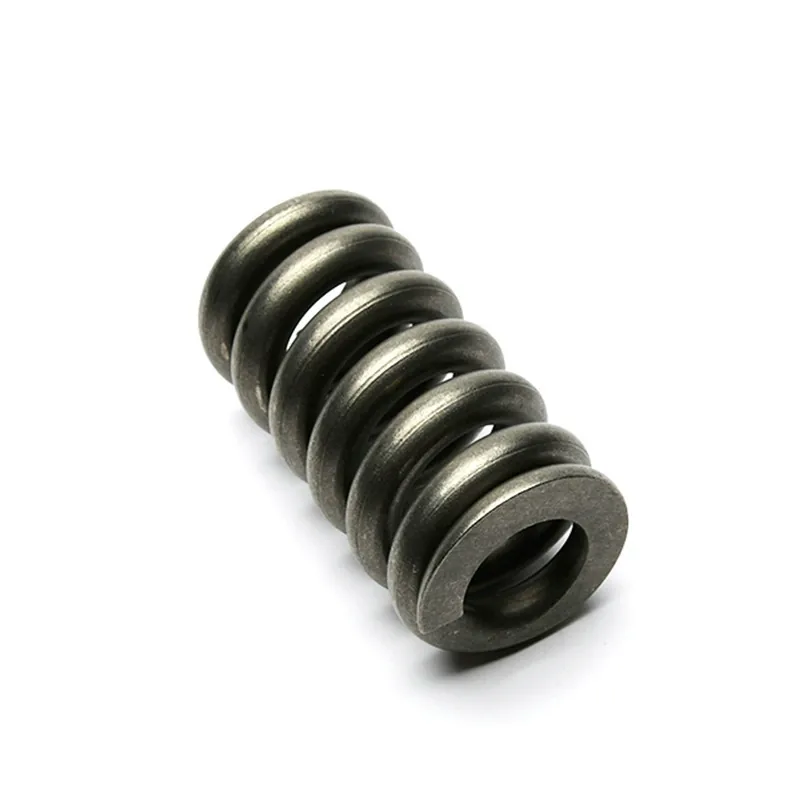
Valve and engine springs work under repeated motion and often elevated temperature, so they are normally designed around a load curve and operating cycle rather than selected from a simple dimension table. Seat load, open load, installed height and maximum lift are key inputs, while frequency and moving mass influence dynamic behavior.
These springs should be reviewed with functional load testing at the actual heights. For demanding high-cycle work, material condition, heat treatment, shot peening and dimensional consistency need to be part of the production plan.
Made to Order
This category is reviewed from the drawing and working requirement rather than from a fixed public stock list.
Built to OEM drawing or application-specific load curve
Chrome-silicon or chrome-vanadium spring steel
Valve and engine springs are engineered per application (RPM, seat load, cam profile) and are not sold from a generic size table.
Engineering Data
Use these data points to compare geometry, material and working parameters when defining your custom spring. Final values are reviewed and confirmed for the actual assembly before production.
| Configuration | Data type | Key parameters | Material / basis |
|---|---|---|---|
| Engineering reference | Engineering Data |
|
Per application / drawing |
| Engineering Data 02 | Manufacturing Range |
|
Common spring steels, stainless steels and alloys |
| Engineering Data 03 | Manufacturing Range |
|
Per drawing |
| Typical Configuration 04Data point | Typical Configuration |
|
Valve spring alloy / manufacturer specification |
| Typical Configuration 05Data point | Typical Configuration |
|
Valve spring alloy / manufacturer specification |
| Typical Configuration 06Data point | Typical Configuration |
|
Valve spring alloy / manufacturer specification |
Design note: dimensions, force / torque, material, tolerances, fatigue life and compliance are finalized against your drawing and operating conditions during quotation.
Next Design Decisions
Once the spring style is selected, confirm how it works in the assembly, which material suits the environment, how it will be manufactured and which dimensions and performance points should be controlled on the drawing.
Applications
Review best-fit uses, assembly constraints and situations where another spring style may be a better choice.
View application guidance →Materials
Chrome-silicon and chrome-vanadium spring steels are common high-fatigue choices. Elevated temperature or corrosive service may require stainless or nickel-base alloys after a separate material review.
Compare spring materials →Manufacturing
Review forming, heat treatment, secondary operations, inspection and the path from first samples to repeat production.
View manufacturing capabilities →Engineering Data
Use the engineering library to review materials, sizing considerations and applicable standards for the custom design.
Open Spring Engineering Guide →Material Direction
The links below are selection guides, not a claim that every grade is suitable for every size or load.
Compare Designs
Use these alternatives when the available space, connection style, travel or force direction changes.
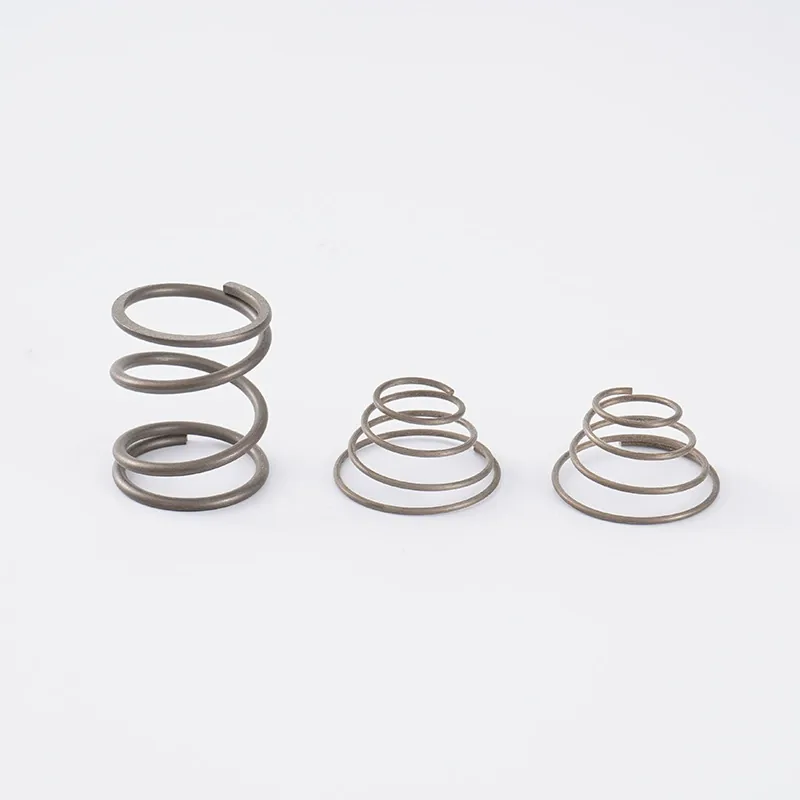
Die Springs
Heavy-duty die springs referenced to ISO 10243 duty classes for tooling, fixtures and repeated high-load compression where bore size, stroke and duty level must be matched together.
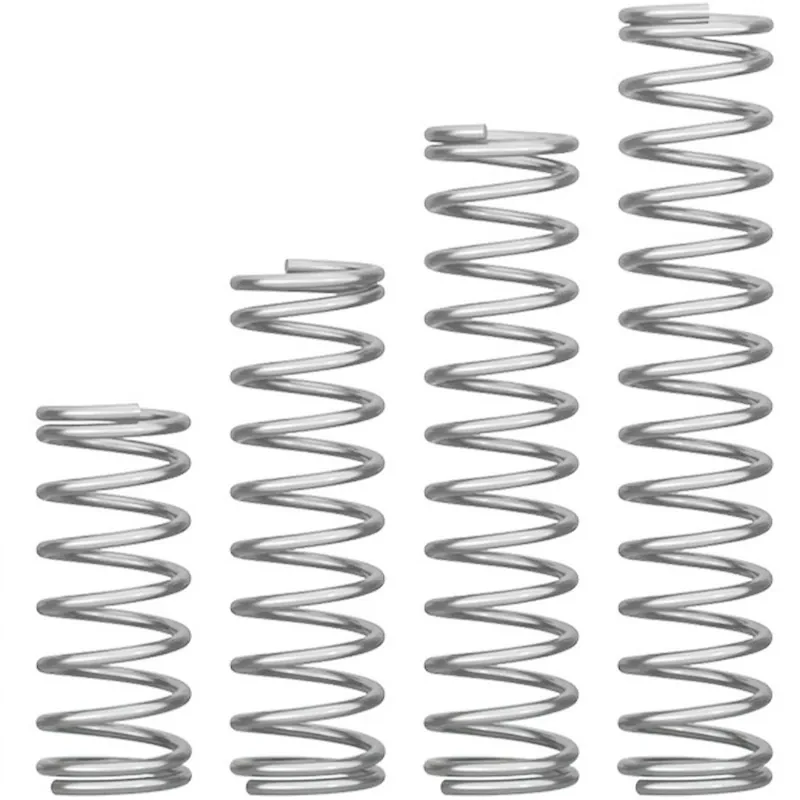
Compression Springs
A straight, constant-diameter coil for predictable axial force where the spring works inside a bore, around a guide, or between two flat seats.
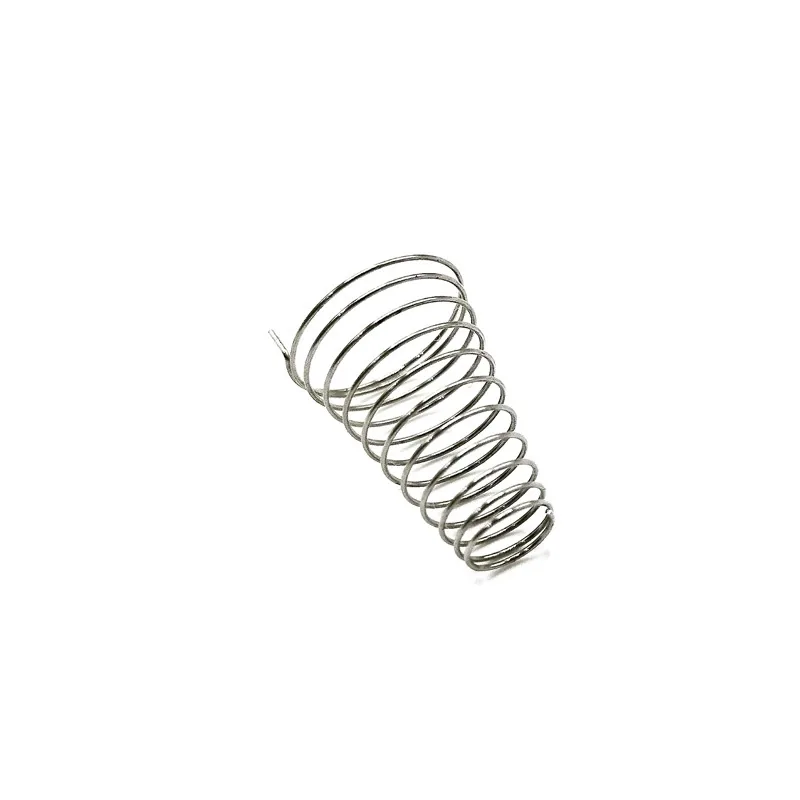
Compression Springs
A tapered compression spring for assemblies that need a changing diameter, improved stability, or a lower compressed package than a conventional straight coil can provide.
Product Questions
The spring force depends on height. A small installed-height change can shift seat load and the force available through the whole motion.
No. Dynamic speed, required loads, lift, coil clearance and life are central to the design.
RFQ
A drawing is ideal. If you do not have one yet, provide the dimensions, load or torque, travel, environment and expected quantity that matter in the assembly.
CustomSprings Engineering Catalog
Send your dimensions, quantity and drawing for engineering review.