
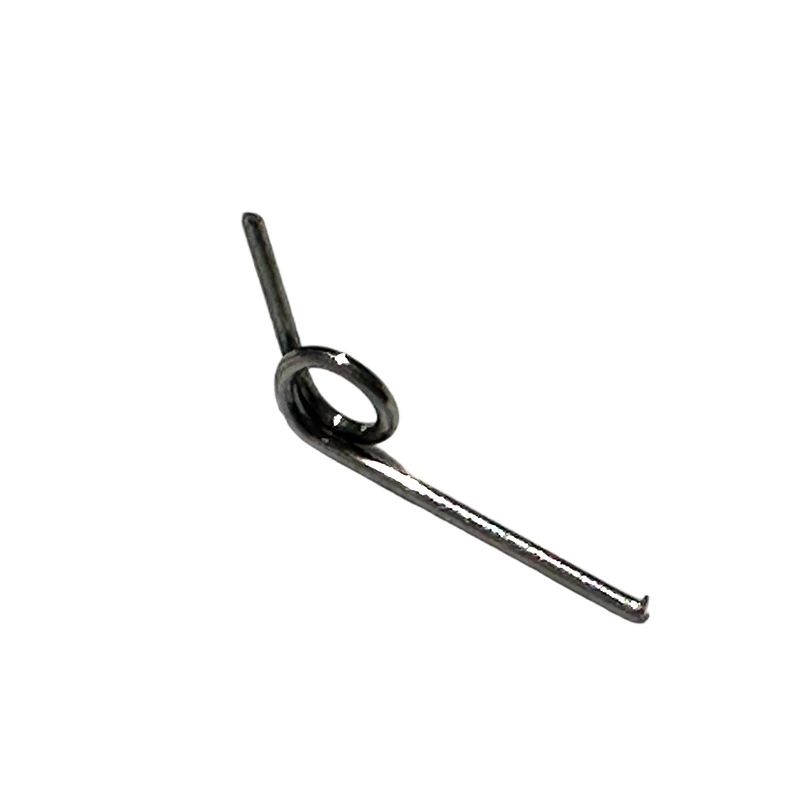
For product selection, compare Extension Springs.
Key Takeaways
- Extension spring design starts with required load at installed length, travel, and space envelope, not with a wire diameter.
- Spring rate, initial tension, and load at length are interdependent, so changing one geometry value affects stress and solid length.
- Hook and end geometry is a common failure point and must be specified with mating component dimensions.
- Material selection must match temperature, corrosion exposure, and cycle life, not just strength.
- A complete RFQ includes function, lengths, loads, envelope, end configuration, material, cycle life, and volume.
You are specifying an extension spring for a new assembly, and you need to know how to move from a required pull force and travel to a manufacturable spring. This guide explains the engineering relationships behind extension spring design, the inputs you must gather before any spring design calculation, and how to prepare a clean data package for a custom spring supplier. It does not replace a spring design calculator or a supplier’s engineering review, but it gives you the framework to ask the right questions and avoid the most common specification errors.
Answer-First Explanation of Extension Spring Design
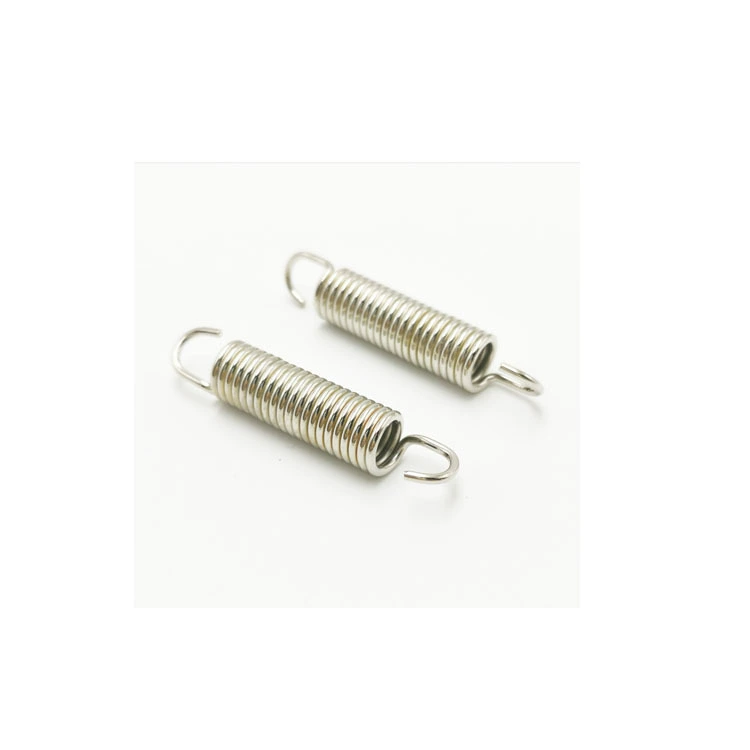
An extension spring stores energy when it is pulled apart. The design process starts with the load you need at a specific extended length, the travel between your installed length and your maximum working length, and the space envelope the spring must fit inside. From there, wire diameter, outside diameter, free length, coil count, initial tension, and end configuration are selected so the spring delivers that load without exceeding stress limits or losing force over the product’s life. Every one of those values interacts. Changing wire diameter to gain load also changes stress, solid length, and the rate. That is why extension spring design is iterative, and why a supplier needs your full operating picture rather than a single force number.
Key Formulas and Engineering Relationships
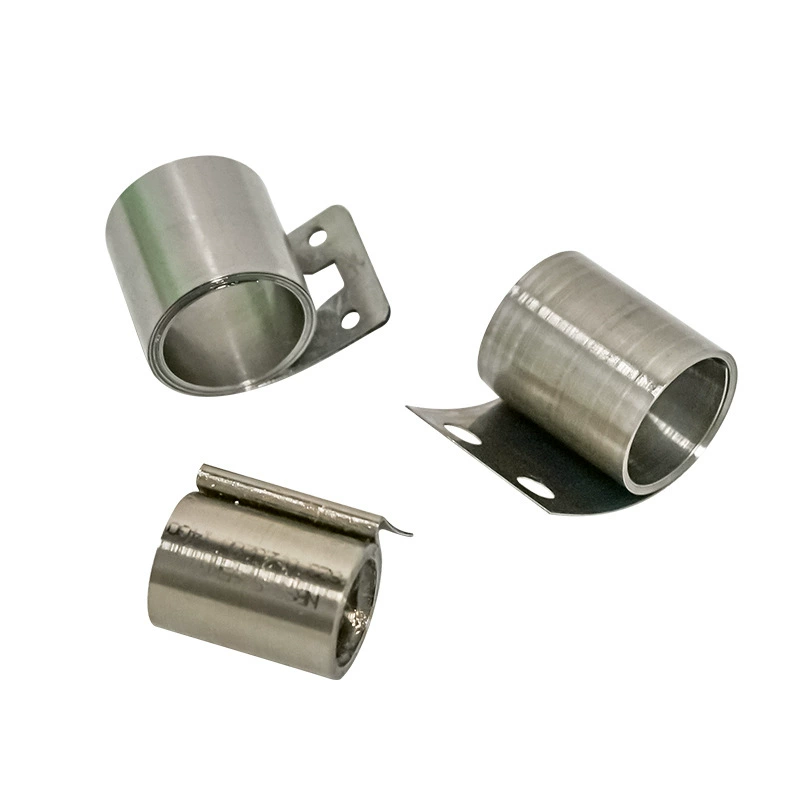
Extension spring behavior is governed by a small set of relationships. You do not need to memorize them, but understanding what drives what helps you make better trade-offs.
- Spring rate describes how much force increases per unit of extension. It depends on wire diameter, mean coil diameter, active coil count, and the material’s shear modulus. Stiffer wire and fewer coils raise the rate; larger diameter coils lower it.
- Initial tension is the force built into a close-wound extension spring before it begins to extend. It comes from the winding process and is influenced by the spring index and material. It is not a free variable you can set independently of geometry.
- Load at length equals initial tension plus the product of rate and deflection from free length. This is the relationship most engineers use to check whether a candidate design meets the required pull force.
- Stress in the coils must stay below the material’s allowable limit for the application’s cycle life and environment. Stress correction factors account for the curvature of the coil and the direct shear contribution.
- Deflection is the difference between the installed length and the working length. It is a design input, not a result.
These relationships are described in more detail in the site’s reference data and Spring Guide pages. If your project requires exact rate, load, or stress values, engineering confirmation or RFQ review is required because the calculation depends on your specific dimensions, material, and duty cycle.
Inputs Engineers Need Before Any Calculation
A spring design calculation is only as good as the inputs. Before you open a calculator or send a drawing, collect the following. Missing any one of these usually means the first design iteration will be wrong.
Geometry and Space
- Maximum outside diameter allowed by the housing or bore.
- Minimum inside diameter needed to clear a rod, pin, or fastener.
- Installed length and maximum working length.
- Available free length when the spring is relaxed.
- End configuration: hooks, loops, threaded ends, reduced ends, or special attachments.
Load and Travel
- Required load at the installed length.
- Required load at the maximum working length.
- Acceptable tolerance on both loads.
- Whether the spring must hold a preload when installed.
Material and Environment
- Operating temperature range, including peaks.
- Corrosion exposure: humidity, salt spray, chemicals, or wash-down.
- Magnetic or non-magnetic requirements.
- Food, medical, or automotive compliance needs.
Life and Duty Cycle
- Expected number of cycles over the product life.
- Cycle frequency and whether the spring sits under constant load.
- Shock, vibration, or overload conditions.
Material selection follows from these inputs. Carbon steel, stainless steel, and specialty alloys each trade off strength, corrosion resistance, and cost. The site’s material pages describe the options, but the final choice should be confirmed against your actual environment and cycle target.
Design Trade-Offs and Warning Signs
Extension spring design is full of compromises. Recognizing them early saves iterations.
- Higher load usually means higher stress. Increasing wire diameter raises load capacity but also raises stress at a given deflection and reduces the number of coils that fit in the envelope.
- More travel means more length. A spring that must extend far needs enough free length and coil count to avoid exceeding stress limits. Cramming travel into a short spring forces high stress and short life.
- Initial tension is not free. Asking for high initial tension in a spring with a large index or stiff wire may not be manufacturable. It also affects the load at installed length.
- Hook stress is often the failure point. The end loops see bending and stress concentration that the coils do not. Hook geometry matters as much as coil geometry.
- Corrosion and temperature reduce allowable stress. A design that works in a dry, room-temperature lab may fail in a humid or hot environment.
- Tolerance stack-up. Load tolerance, length tolerance, and diameter tolerance interact. Tightening all of them at once can make a spring difficult or impossible to produce economically.
Warning signs that a design needs rethinking include: required load that cannot be met without exceeding stress limits, travel that exceeds what the free length allows, an envelope too small for the wire diameter needed, and a cycle life target that rules out the preferred material.
When to Use the Spring Guide, Calculators, or Reference Data
Use the site’s Spring Guide and reference data when you need to understand how a change in wire diameter, coil count, or material affects rate and load before you commit to a drawing. Use a spring design calculator when you have a complete set of inputs and want a first-pass geometry. Use the supplier’s engineering team when the application involves fatigue, corrosion, high temperature, or a safety-critical function, because those cases require confirmation beyond a generic calculation.
For extension springs specifically, the reference data can help you sanity-check whether your target load and travel are in a reasonable range for the envelope you have. If the numbers look impossible, the problem is usually the envelope or the travel requirement, not the calculator.
How to Prepare Data for a Custom Spring Design or RFQ
A clean RFQ shortens the design cycle. Include the following in a single document or drawing package.
- A clear statement of function: what the spring does and what happens if it fails.
- Installed length, working length, and maximum travel.
- Required load at each length, with acceptable tolerance.
- Space envelope: maximum outside diameter, minimum inside diameter, and available length.
- End configuration with a sketch or CAD model.
- Material preference or the environment it must survive.
- Cycle life target and duty cycle.
- Any standards, testing, or documentation requirements.
- Annual volume or prototype quantity, so the supplier can advise on process.
If you do not have all of these, say so. A supplier can often recommend a starting point, but the final design still requires engineering confirmation. For extension springs with hooks or threaded ends, include the mating component dimensions so the end geometry can be checked. If your application is a battery contact, motor brush, or clip, the relevant category pages show the range of configurations available and can help you describe what you need.
| Design Input | What It Affects | Why It Matters |
|---|---|---|
| Wire diameter | Rate, load, stress, solid length | Primary lever for meeting load without exceeding stress |
| Coil count | Rate, travel, free length | More coils lower rate and allow more travel |
| Initial tension | Load at installed length | Built in during winding; not freely adjustable |
| End configuration | Attachment, stress concentration | Hooks and loops are common failure locations |
| Material | Allowable stress, corrosion, temperature | Must match environment and cycle life |
| Cycle life target | Stress limit, material choice | Fatigue governs long-life designs |
SEO and PSEO Rules for Spring Design Content
When you publish or reference spring design content, keep the language precise. Use terms like extension spring design, spring design calculation, and spring rate correctly, and avoid implying that a generic formula guarantees a manufacturable part. Search engines and AI answer engines reward content that names the spring type, material, process, and application clearly. That is also what helps a supplier’s engineering team understand your request quickly. If you are comparing spring types, link to the relevant category page rather than restating its specifications. If you are discussing material behavior, link to the material page. This keeps the design guide useful without duplicating product pages.
Ready to move from concept to a reviewed design? Send your dimensions, load, travel, and environment details for drawing review or sample review. If you are still defining requirements, start with the Spring Guide and reference data, then bring your questions to an RFQ.
Frequently Asked Questions
What is the first step in extension spring design?
Define the required load at the installed length, the travel to maximum working length, and the space envelope. These three inputs drive every subsequent geometry decision. Without them, any spring design calculation is guesswork.
How does initial tension affect an extension spring?
Initial tension is the force built into a close-wound extension spring before it extends. It adds directly to the load at installed length. It is created during winding and depends on spring index and material, so it cannot be set independently of geometry.
Why do extension spring hooks fail before the coils?
Hooks and end loops experience bending and stress concentration that the coils do not. They are often the first location to yield or fatigue. Specifying hook geometry with mating component dimensions helps the supplier design a durable end.
Can I use a spring design calculator for a fatigue-critical extension spring?
A calculator can give a first-pass geometry, but fatigue-critical applications require engineering confirmation. Stress limits for long cycle life depend on material, surface condition, and environment. A supplier review is needed before committing to production.
What information should I include in a custom extension spring RFQ?
Include function, installed and working lengths, required loads with tolerance, space envelope, end configuration, material or environment, cycle life target, and annual volume. A sketch or CAD model of the ends helps the supplier check attachment and stress.
Spring Products for This Guide
Open a product to review its geometry and the information needed for a custom quote.
- Continuous-Length Extension SpringsExtension Springs — geometry and quotation requirements
- Cross-Over Loop Extension SpringsExtension Springs — geometry and quotation requirements
- Drawbar Extension SpringsExtension Springs — geometry and quotation requirements
- English-Hook Extension SpringsExtension Springs — geometry and quotation requirements
- German-Hook Extension SpringsExtension Springs — geometry and quotation requirements
- Hookless Extension SpringsExtension Springs — geometry and quotation requirements