
Key Takeaways
- Spring rate is the ratio of force to deflection and determines how stiff a spring is.
- For round-wire helical springs, spring rate is proportional to wire diameter to the fourth power and inversely proportional to the cube of mean coil diameter and number of active coils.
- Accurate spring rate calculation requires wire diameter, coil diameter, active coils, material modulus, load, travel, cycle life, and environment.
- Design trade-offs such as stress, buckling, and fatigue life must be balanced with spring rate requirements.
- Providing complete application data in an RFQ enables engineers to confirm spring rate and manufacturability.
Spring rate is the change in load per unit of deflection for a spring. It is the single most important number in spring design calculation because it defines how a spring will behave under load, whether it is a compression spring, extension spring, torsion spring, or wave spring. Spring rate is not a fixed property of a spring; it depends on geometry, material, and the type of loading. For engineers and product designers specifying custom mechanical springs, understanding spring rate is the foundation for predicting force, travel, and fatigue life.
Answer-First Explanation of Spring Rate
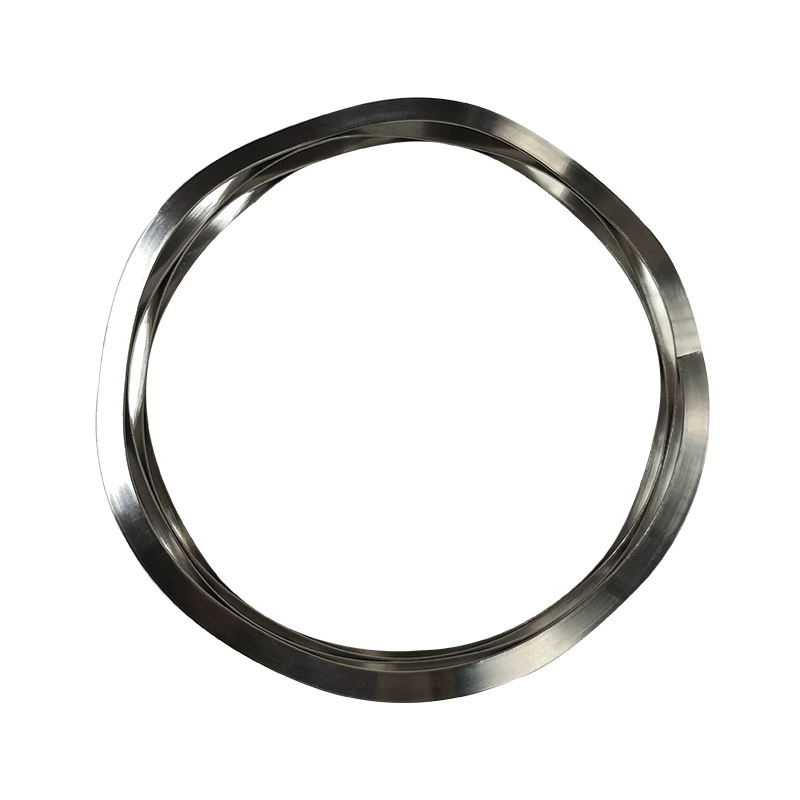
Spring rate, often called spring constant or stiffness, is the ratio of force to deflection. In linear springs, it is expressed in pounds per inch (lb/in) or newtons per millimeter (N/mm). A higher spring rate means the spring is stiffer and requires more force to compress or extend a given distance. A lower spring rate means the spring is softer and more compliant. For torsion springs, the equivalent term is torque per degree or torque per radian. For wave springs, the rate is influenced by the number of waves and the wave geometry. Spring rate is determined by wire diameter, coil diameter, number of active coils, and material modulus. It is not something you can guess; it must be calculated or measured. If you need exact values for your application, engineering confirmation or RFQ review is required.
Key Formulas and Engineering Relationships
For a helical compression or extension spring made from round wire, the spring rate (k) is calculated using the formula:
k = (G * d^4) / (8 * D^3 * N)
Where:
- G = shear modulus of the material (psi or MPa)
- d = wire diameter (in or mm)
- D = mean coil diameter (in or mm)
- N = number of active coils
This formula shows that spring rate is highly sensitive to wire diameter (to the fourth power) and inversely proportional to the cube of the mean coil diameter and the number of active coils. Small changes in wire diameter can dramatically change the rate. For extension springs, the initial tension must be considered separately; it is the force required to separate the coils and is not part of the spring rate calculation. For torsion springs, the rate is torque per degree and depends on the wire diameter, coil diameter, number of coils, and the material’s modulus of elasticity. For wave springs, the rate is influenced by the number of waves, the wave height, and the material thickness. These formulas are starting points; real-world behavior can be affected by end conditions, stress, and manufacturing tolerances. Always verify with engineering calculations and testing.
Inputs Engineers Need Before Calculation
Before you can calculate spring rate, you need a set of inputs. Missing any of these will lead to inaccurate results. The required inputs include:
- Dimensions: wire diameter, outside diameter, inside diameter, free length, solid height, number of active coils, and end configurations (e.g., closed, open, ground).
- Material: the specific material grade and its modulus (shear modulus for compression/extension, elastic modulus for torsion). Common materials include music wire, stainless steel, chrome silicon, and phosphor bronze. Material selection affects both rate and fatigue life.
- Load: the force or torque the spring must exert at a given deflection. This may be a single load point or a range.
- Travel: the deflection or angular rotation the spring will experience in service.
- Cycle life: the number of cycles the spring must endure. This influences stress levels and material choice.
- Environment: temperature, corrosion, and presence of contaminants. These factors can change material properties and require coatings or special materials.
Without these inputs, any spring rate calculation is speculative. For custom springs, it is best to provide these details to a spring engineer for review.
Design Trade-offs and Warning Signs
Spring design is a series of trade-offs. Increasing wire diameter raises spring rate but also increases stress and may reduce fatigue life. Reducing the number of active coils increases rate but also increases stress per coil. Using a larger mean coil diameter lowers rate but may cause buckling in compression springs. For extension springs, adding initial tension increases the force required to start deflection but can reduce available travel. For torsion springs, increasing the number of coils reduces rate but increases the angular travel. Warning signs that your spring rate may be problematic include:
- Stress levels exceeding the material’s allowable limits, leading to premature failure.
- Spring surging or resonance in dynamic applications.
- Buckling in compression springs with high slenderness ratios.
- Insufficient travel before reaching solid height.
- Excessive load loss over time due to relaxation or creep.
These issues cannot be resolved by spring rate alone; they require a holistic design review.
When to Use the Site Spring Guide, Calculators, or Reference Data
Spring rate calculations can be complex, especially for non-standard geometries or materials. Instead of guessing, use the resources available on our site. The Spring Guide and reference data pages provide material properties, formulas, and design considerations. For standard spring types, you can refer to our spring catalog and category pages, such as Single-Turn Gap Wave Springs or Crest-to-Crest Wave Springs, to see how spring rate varies with design parameters. For custom designs, our engineering team can assist with calculations. If you need exact spring rate values for your application, engineering confirmation or RFQ review is required.
How to Prepare Data for a Custom Spring Design/RFQ
To get an accurate spring rate and a manufacturable design, prepare a clear data package for your RFQ. Include the following:
- Application description: what the spring does, how it is mounted, and the expected motion.
- Dimensional constraints: maximum outside diameter, minimum inside diameter, free length, and solid height limits.
- Load and travel requirements: required load at one or more deflections, and the total travel.
- Cycle life: expected number of cycles and whether the application is static or dynamic.
- Environment: temperature range, corrosion exposure, and any special requirements.
- Material preferences: if you have a material in mind, specify it; otherwise, our engineers can recommend one.
- End configurations: for compression springs, specify closed, open, or ground ends; for extension springs, specify hook type; for torsion springs, specify leg angles.
Providing this information upfront reduces back-and-forth and speeds up the quotation process. If you are unsure about any parameter, note it and our team can help.
Consolidated Overview of Spring Rate Design
| Aspect | Details |
|---|---|
| Definition | Spring rate is the change in load per unit of deflection; it defines stiffness. |
| Key formula | k = (G * d^4) / (8 * D^3 * N) for round-wire helical springs; other types use analogous relationships. |
| Critical inputs | Wire diameter, mean coil diameter, active coils, material modulus, load, travel, cycle life, environment. |
| Design trade-offs | Higher rate increases stress and may reduce fatigue life; lower rate may cause buckling or insufficient load. |
| When to seek help | Use Spring Guide and reference data for initial estimates; consult engineering for exact values and custom designs. |
| RFQ preparation | Provide application details, dimensions, loads, travel, cycle life, environment, and material preferences. |
Spring rate is a fundamental concept, but it is only one part of a successful spring design. By understanding the relationships and preparing complete data, you can streamline the custom spring process. For a drawing review, sample review, or to discuss your dimensions, contact our engineering team. We are ready to assist with your RFQ.
Frequently Asked Questions
What is spring rate and how is it calculated?
Spring rate is the change in load per unit of deflection. For a helical compression or extension spring, it is calculated as k = (G * d^4) / (8 * D^3 * N), where G is the shear modulus, d is wire diameter, D is mean coil diameter, and N is the number of active coils. Other spring types use analogous formulas based on torque or bending.
How does wire diameter affect spring rate?
Wire diameter has a fourth-power relationship with spring rate. This means that a small increase in wire diameter significantly increases the spring rate. For example, doubling the wire diameter increases the rate by a factor of 16, all else being equal. This sensitivity makes wire diameter a critical parameter in spring design.
What is the difference between spring rate and initial tension?
Spring rate is the change in load per unit of deflection and applies to all springs. Initial tension is a force built into extension springs that holds the coils together; it must be overcome before the spring begins to extend. Initial tension is not part of the spring rate calculation but affects the total load at a given deflection.
Can spring rate change over time?
Yes, spring rate can change due to relaxation, creep, or fatigue, especially at elevated temperatures or under high stress. Material selection, stress levels, and operating environment all influence how much the rate may change. For critical applications, testing and engineering review are recommended.
How do I specify spring rate for a custom spring?
To specify spring rate, you need to provide the required load at a given deflection, along with dimensional constraints, travel, cycle life, and environmental conditions. Our engineering team can then calculate the necessary wire diameter, coil diameter, and active coils to meet your requirements. If exact values are needed, engineering confirmation or RFQ review is required.