
Applications
Where this spring style fits
Review best-fit uses, assembly constraints and situations where another spring style may be a better choice.
View application guidance →Compression Springs
Variable-pitch compression springs specified by a required load curve, with coil spacing and working travel reviewed together.
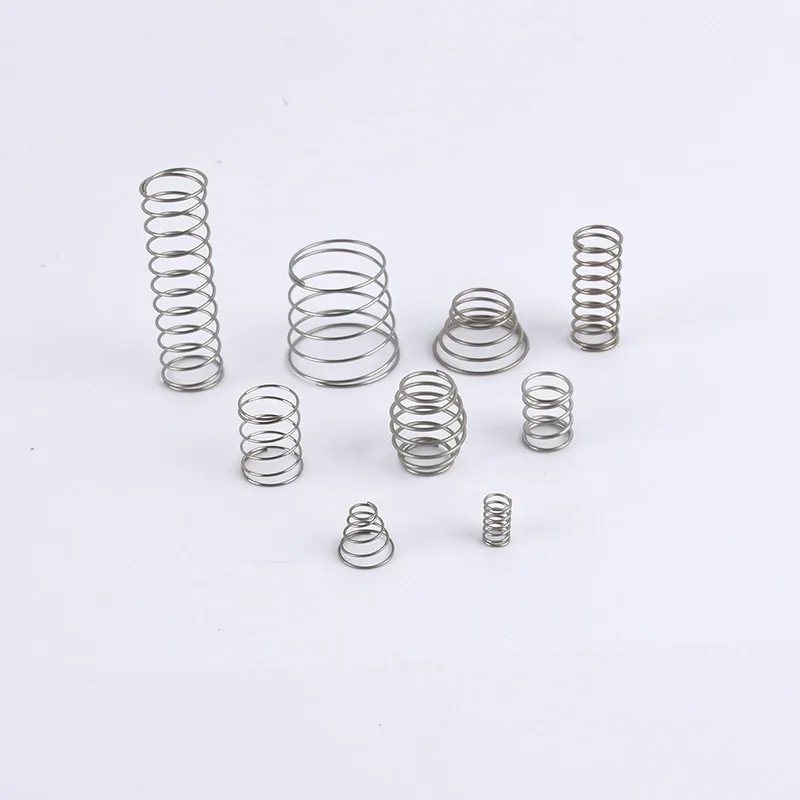
Variable-pitch springs use different spacing along the coil body. As compression progresses, some coils can come into contact and stop contributing to active movement, changing the effective spring rate. A useful specification therefore describes several force-height points, including any desired transition. Variable pitch is a design feature; a progressive performance claim still requires the intended geometry and load curve to be checked.
A constant-pitch spring is commonly specified with a working rate over its active range. Use the variable-pitch page when the assembly needs a deliberate change in resistance through its travel; compare complete force curves rather than one rate number.
Agree load-test positions and tolerances for the different parts of the stroke. Record any allowed hysteresis or permanent set separately so the acceptance test reflects the intended progressive action.
Product Specification
Use these product-specific inputs to describe your requirement. Final dimensions, material and performance are confirmed against the drawing and operating conditions.
| Specification item | What to define |
|---|---|
| Pitch regions | Coil spacing, coil count and position of each region. |
| Force curve | Required forces at multiple heights, including transition points. |
| Compression limit | Minimum working height and permitted coil-contact condition. |
| Envelope | Body diameter, guide clearance and seating geometry. |
| Duty cycle | Operating temperature, cycle range and allowable load change. |
Next Design Decisions
Once the spring style is selected, confirm how it works in the assembly, which material suits the environment, how it will be manufactured and which dimensions and performance points should be controlled on the drawing.
Applications
Review best-fit uses, assembly constraints and situations where another spring style may be a better choice.
View application guidance →Materials
Material selection should consider the highest working stress and repeated movement across pitch transitions.
Compare spring materials →Manufacturing
Review forming, heat treatment, secondary operations, inspection and the path from first samples to repeat production.
View manufacturing capabilities →Engineering Data
Use the engineering library to review materials, sizing considerations and applicable standards for the custom design.
Open Spring Engineering Guide →Material Direction
The links below are selection guides, not a claim that every grade is suitable for every size or load.
Review the design and measurement requirements for this spring family.
Compare Designs
Use these alternatives when the available space, connection style, travel or force direction changes.
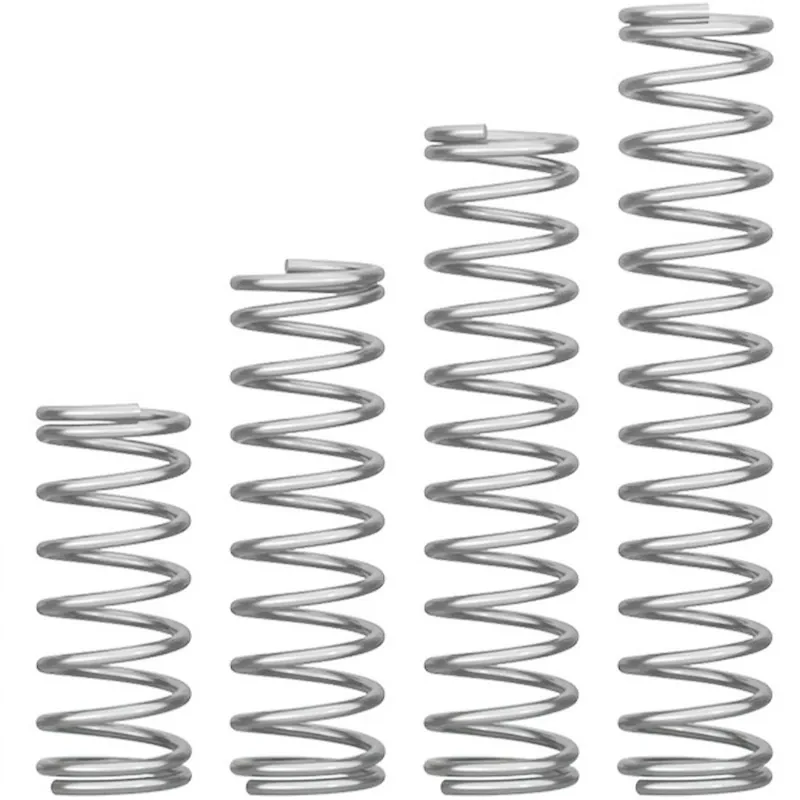
Compression Springs
A straight, constant-diameter coil for predictable axial force where the spring works inside a bore, around a guide, or between two flat seats.
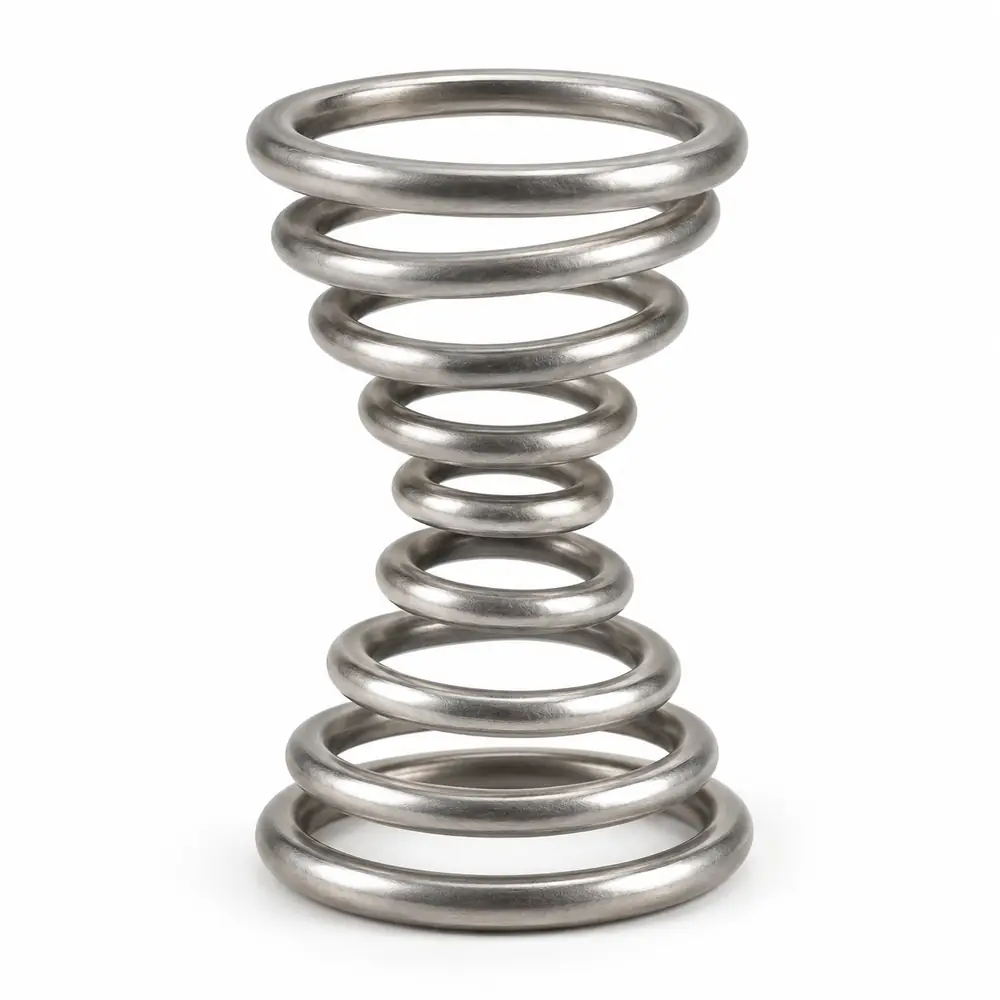
Compression Springs
Compression springs with a narrower waist and wider end coils, specified by the full diameter profile, working heights and required axial loads.
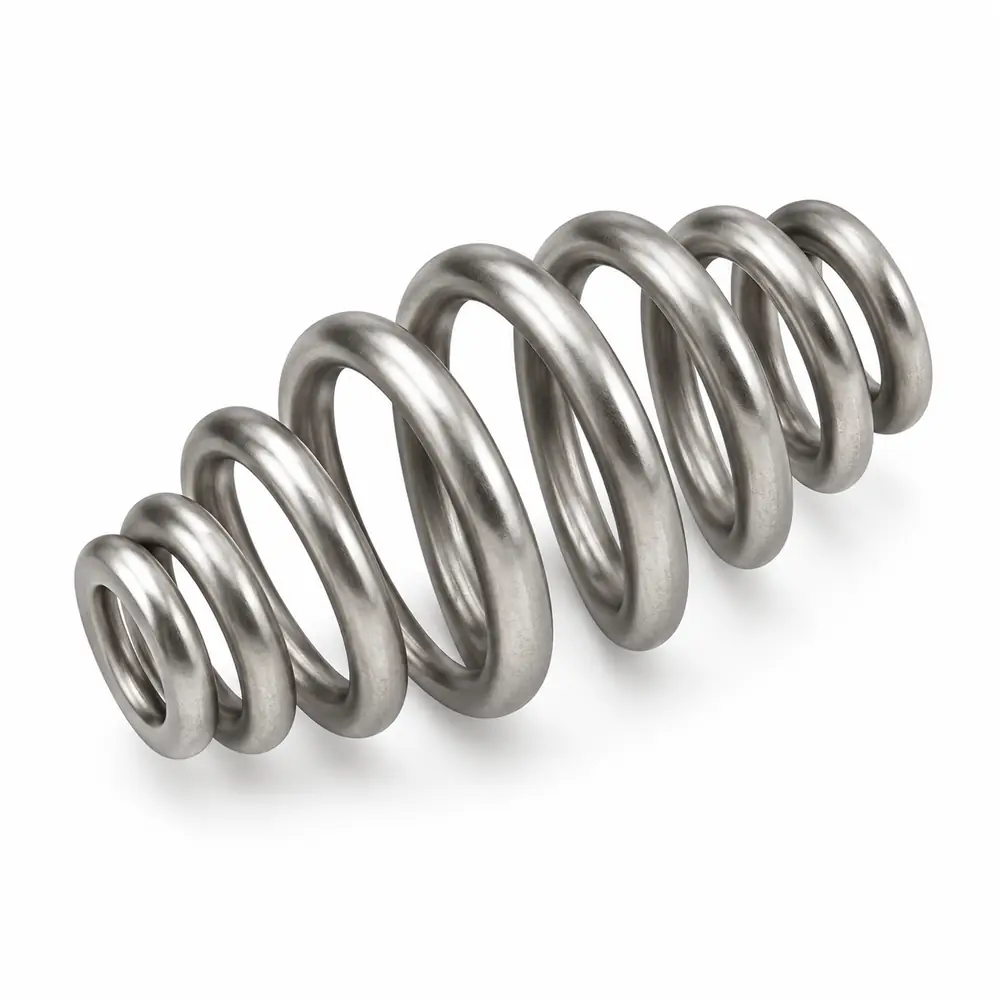
Compression Springs
Barrel-shaped compression springs with a wider middle and smaller end coils, reviewed against seat dimensions, housing clearance and working loads.
Product Questions
Usually not for a deliberately progressive design. Give the load required at several working heights and identify where the response should change.
No. Coil-contact sequence and active geometry determine the response. The proposed spring must be checked against the specified force-height points.
RFQ
A drawing is ideal. If you do not have one yet, provide the dimensions, load or torque, travel, environment and expected quantity that matter in the assembly.
CustomSprings Engineering Catalog
Send your dimensions, quantity and drawing for engineering review.