
Design reference
General fastener spring-washer design practice (e.g. DIN 137, DIN 128 style curved/wave washers)
Spring Washers
Spring washers in wave, curved or conical forms for light-to-moderate axial preload, tolerance compensation and contact maintenance in compact bolted or stacked assemblies.
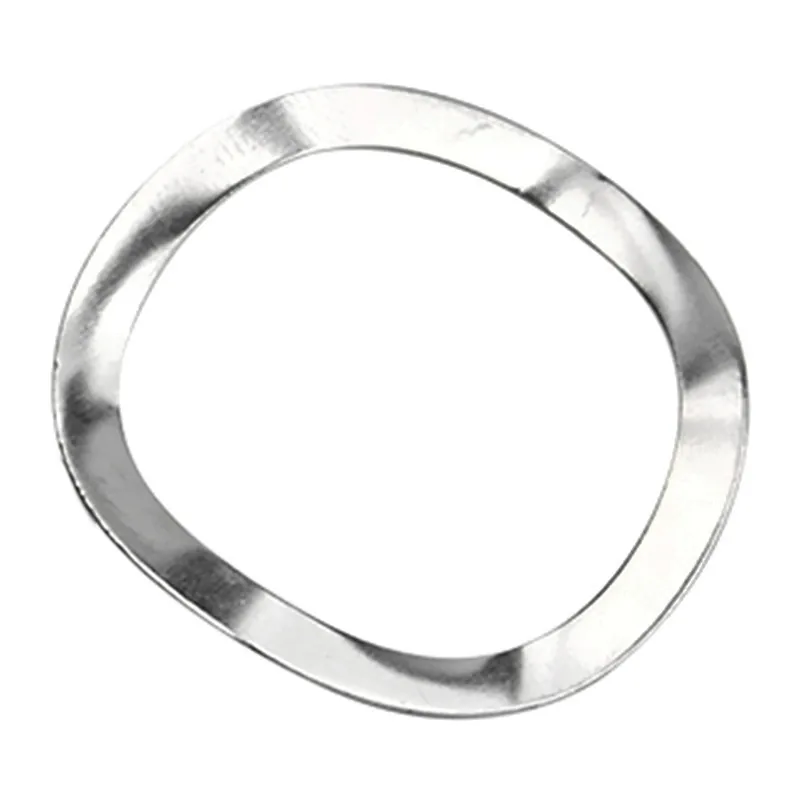
Wave, curved and conical washers all provide axial compliance, but their force and travel ranges differ. They are useful when a small amount of movement must be absorbed under a fastener, bearing, cover or stack. The washer should be selected for preload behavior, not simply by matching the bolt diameter.
Form height and thickness are the main geometric controls. When preload matters, a functional load-height check is usually more useful than relying only on free-state dimensions.
Made to Order
This category is reviewed from the drawing and working requirement rather than from a fixed public stock list.
General fastener spring-washer design practice (e.g. DIN 137, DIN 128 style curved/wave washers)
Carbon spring steel, 301 stainless
Sized to the bolt/screw diameter; confirmed against the fastener spec at quotation.
Next Design Decisions
Once the spring style is selected, confirm how it works in the assembly, which material suits the environment, how it will be manufactured and which dimensions and performance points should be controlled on the drawing.
Applications
Review best-fit uses, assembly constraints and situations where another spring style may be a better choice.
View application guidance →Materials
Carbon spring steel and stainless spring strip are common. Material and finish should be chosen together because coatings can affect friction, corrosion and the very small available stack height.
Compare spring materials →Manufacturing
Review forming, heat treatment, secondary operations, inspection and the path from first samples to repeat production.
View manufacturing capabilities →Engineering Data
Use the engineering library to review materials, sizing considerations and applicable standards for the custom design.
Open Spring Engineering Guide →Material Direction
The links below are selection guides, not a claim that every grade is suitable for every size or load.
Compare Designs
Use these alternatives when the available space, connection style, travel or force direction changes.
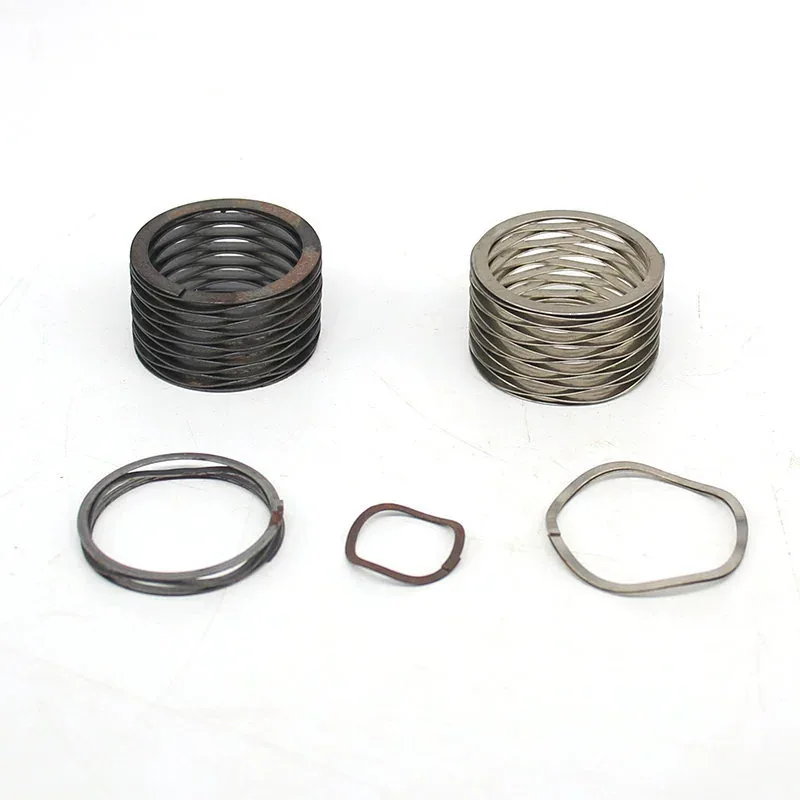
Wave Springs
A washer-like wave spring for light preload, tolerance take-up and rattle control in very shallow axial spaces.
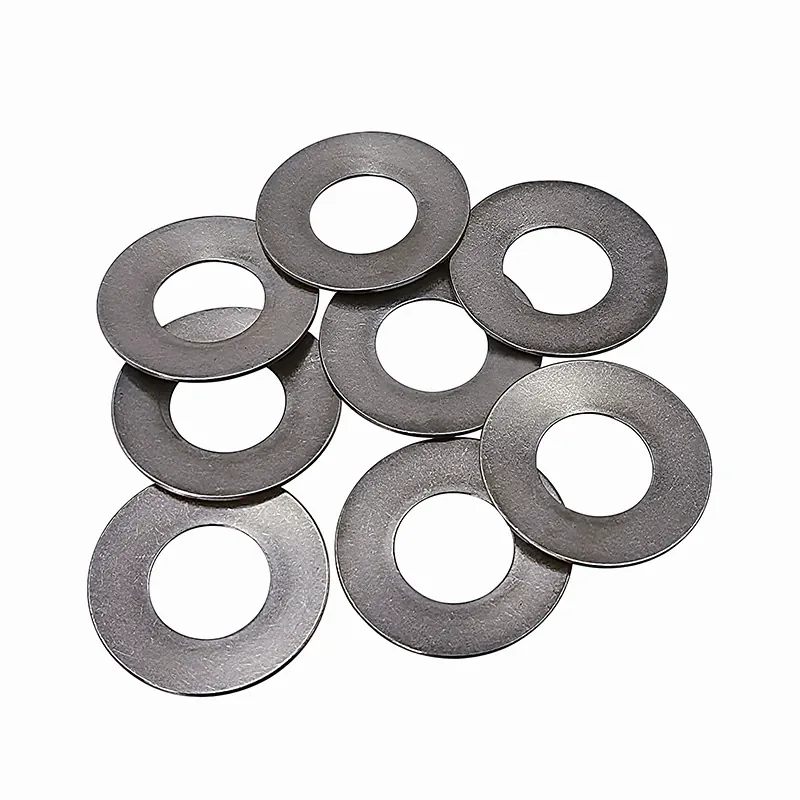
Disc Springs / Belleville Washers
Conical disc springs referenced to DIN 2093 / DIN EN 16983 for high axial force in short travel, with stack arrangements available to change total force and deflection.
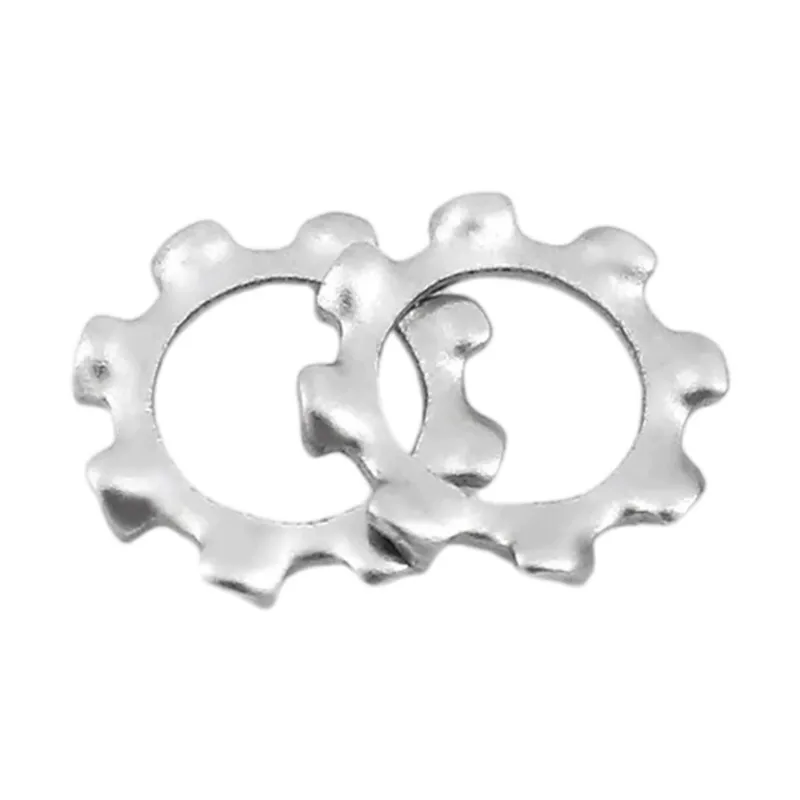
Spring Washers
Spring-style lock washers with split or serrated features for applications that use local spring action and surface engagement beneath a fastener.
Product Questions
They can look similar, but Belleville disc springs are generally designed as higher-force spring elements with more formal load-deflection control. Many conical washers are used for lighter preload duties.
Their main function is spring preload or take-up. If resistance to thread loosening is critical, the joint should be designed and validated specifically for that purpose.
RFQ
A drawing is ideal. If you do not have one yet, provide the dimensions, load or torque, travel, environment and expected quantity that matter in the assembly.
CustomSprings Engineering Catalog
Send your dimensions, quantity and drawing for engineering review.