
Applications
Where this spring style fits
Review best-fit uses, assembly constraints and situations where another spring style may be a better choice.
View application guidance →Compression Springs
Compression springs for guided feeding mechanisms, specified by the channel envelope and force needed through the follower travel.
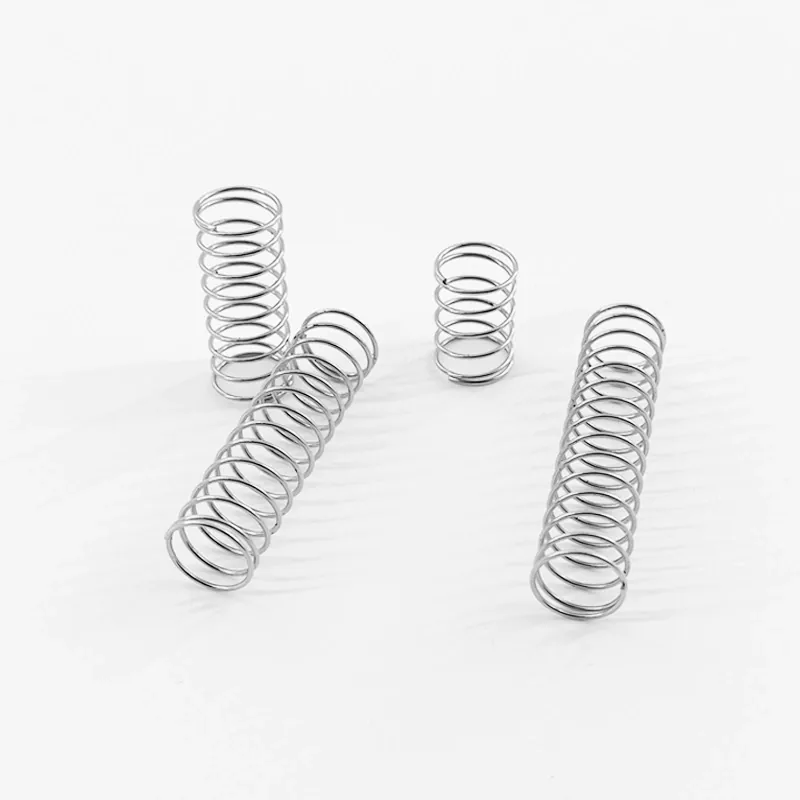
A feeder compression spring advances or returns a moving element within a constrained mechanism. Its body may need a non-circular outline to fit the channel, and its end features must locate against the follower and base. Describe the complete installed path and load range: matching a free length alone does not establish reliable feeding or acceptable end-of-travel force.
This page focuses on the guided feeding function. A rectangular body outline can be made from round wire and should not be confused with rectangular-section wire. Consider body shape and wire section separately.
Define a functional test in the mating channel as well as dimensional and load checks. State unacceptable rubbing, snagging or permanent deformation so assembly behaviour is included in acceptance.
Product Specification
Use these product-specific inputs to describe your requirement. Final dimensions, material and performance are confirmed against the drawing and operating conditions.
| Specification item | What to define |
|---|---|
| Channel envelope | Internal width, depth, guide features and restricted regions. |
| Body geometry | Coil shape, wire size and free length. |
| End location | Follower connection and base seating details. |
| Force through travel | Required loads at identified follower positions. |
| Operating conditions | Cycle range, environment, friction and finish requirements. |
Next Design Decisions
Once the spring style is selected, confirm how it works in the assembly, which material suits the environment, how it will be manufactured and which dimensions and performance points should be controlled on the drawing.
Applications
Review best-fit uses, assembly constraints and situations where another spring style may be a better choice.
View application guidance →Materials
Review spring wire and surface condition with the required cycle range and contact against the channel.
Compare spring materials →Manufacturing
Review forming, heat treatment, secondary operations, inspection and the path from first samples to repeat production.
View manufacturing capabilities →Engineering Data
Use the engineering library to review materials, sizing considerations and applicable standards for the custom design.
Open Spring Engineering Guide →Material Direction
The links below are selection guides, not a claim that every grade is suitable for every size or load.
Review the design and measurement requirements for this spring family.
Compare Designs
Use these alternatives when the available space, connection style, travel or force direction changes.
Compression Springs
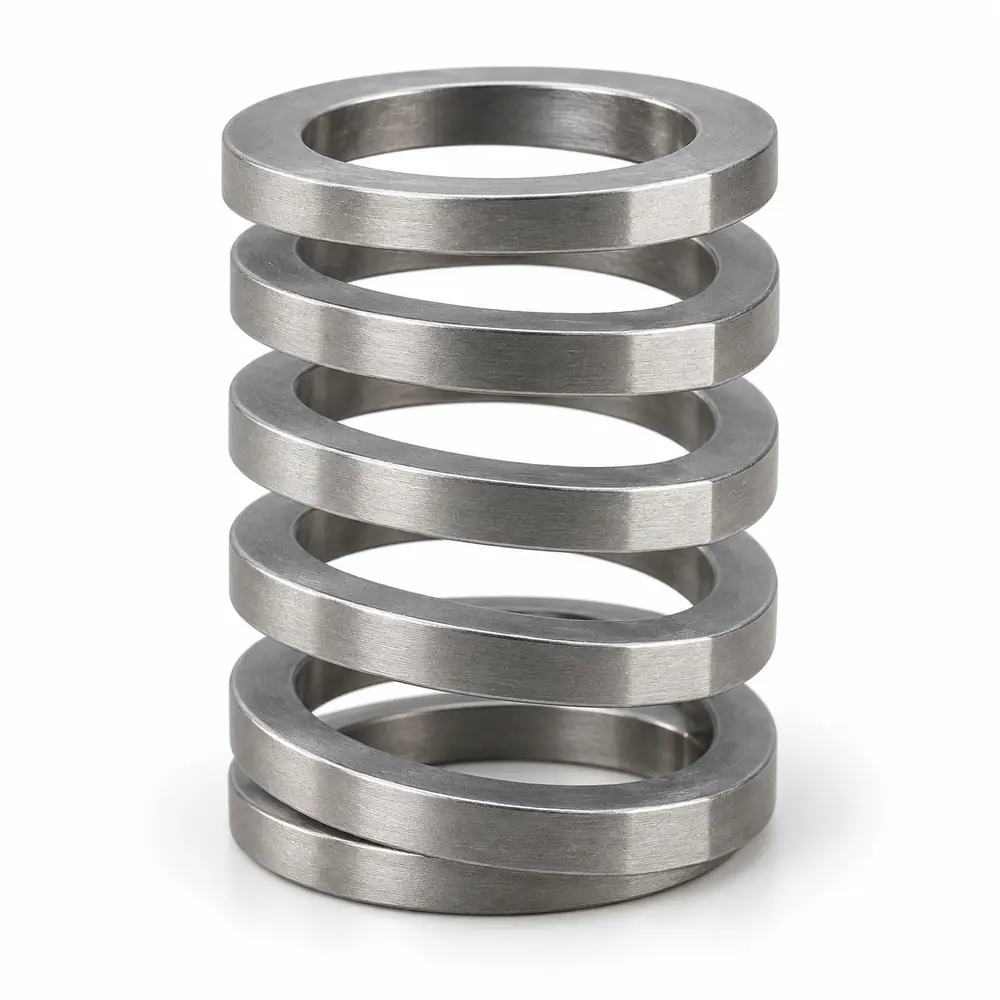
Compression springs made from rectangular-section wire, specified by section width, thickness, winding orientation and working load.
Compression Springs
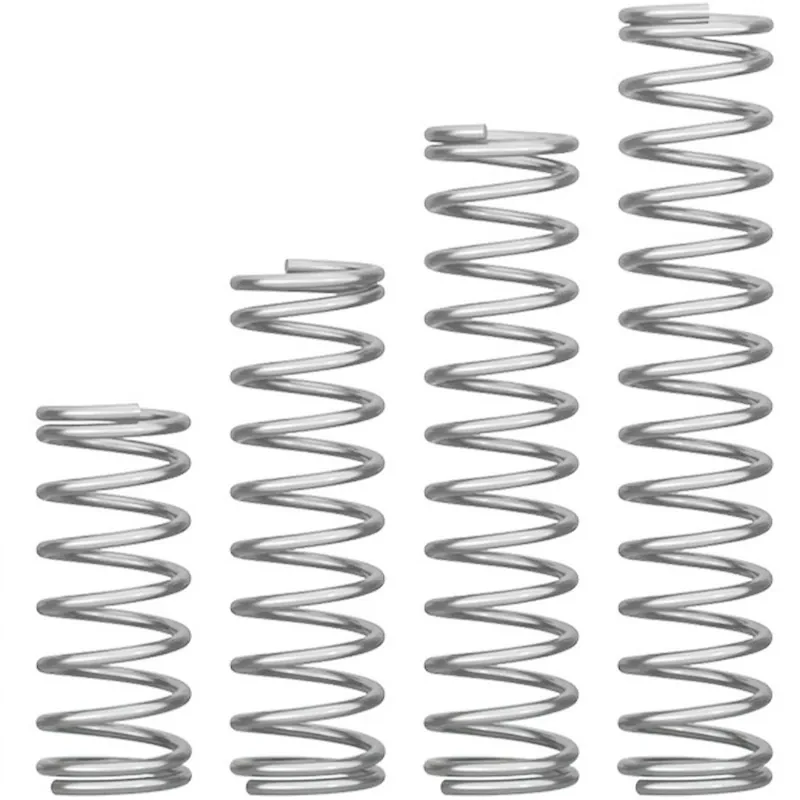
A straight, constant-diameter coil for predictable axial force where the spring works inside a bore, around a guide, or between two flat seats.
Compression Springs
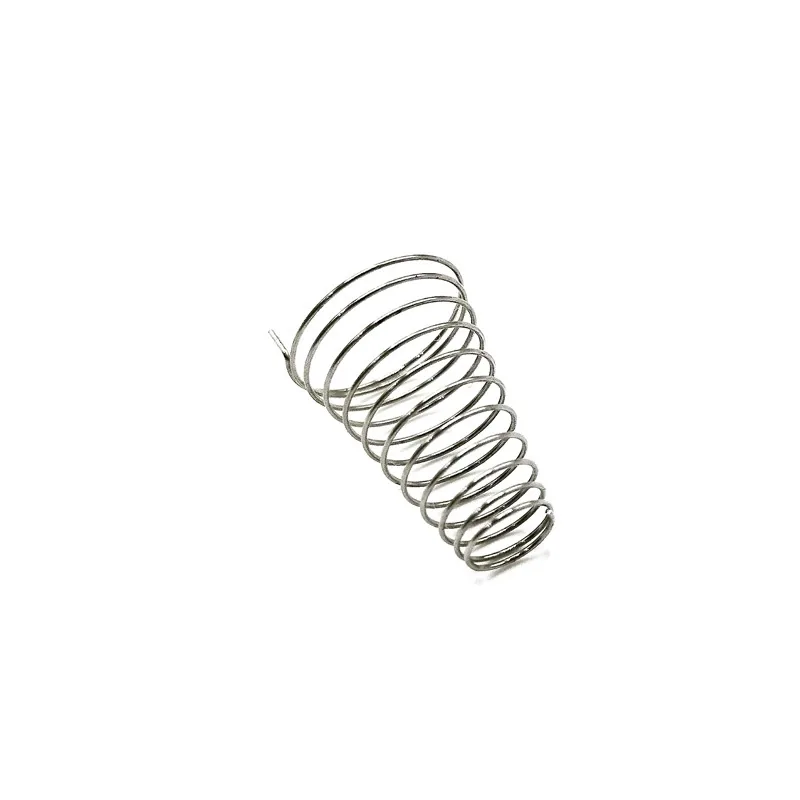
A tapered compression spring for assemblies that need a changing diameter, improved stability, or a lower compressed package than a conventional straight coil can provide.
Product Questions
No. The channel, end interfaces and force at installed positions must also match. Record dimensions and working loads from the actual mechanism.
Not necessarily. Body outline and wire cross-section are different design choices. Identify both on the drawing.
RFQ
A drawing is ideal. If you do not have one yet, provide the dimensions, load or torque, travel, environment and expected quantity that matter in the assembly.
CustomSprings Engineering Catalog
Send your dimensions, quantity and drawing for engineering review.