
For product selection, compare Garter & Canted Coil Springs, Flat Springs & Stampings, Wire Forms.
Key Takeaways
- Spring type determines load direction, motion, and packaging; choose based on axial push/pull, rotation, or bending.
- Wave springs and disc springs save axial space compared to conventional coil springs.
- Extension springs require specifying initial tension; compression springs need buckling checks.
- Material selection must consider environment, temperature, and fatigue life.
- Custom springs are often necessary to meet exact load and space requirements; early engineering review prevents failures.
When you’re designing a mechanism that needs to store energy, absorb shock, or maintain force between components, the spring is often the last part specified—and the first one to cause trouble. With dozens of spring forms available, choosing the wrong type can lead to premature failure, assembly headaches, or a redesign late in the development cycle. This guide walks through the major spring categories, explains how they differ in load direction and motion, and gives you a practical framework for matching a spring form to your application constraints.
What a Spring Type Really Means for Your Design
A spring type is more than a shape—it defines how the spring converts mechanical energy. Compression springs push back against axial loads, extension springs pull, torsion springs resist rotation, and flat springs deflect in bending. Each form has a characteristic load-deflection curve, stress distribution, and failure mode. When you specify a spring, you’re choosing a force profile and a set of packaging requirements, not just a part number.
For example, a compression spring is efficient in axial space but needs room to buckle. A wave spring reduces installed height by up to 50% compared to a conventional coil spring in some applications. A leaf spring distributes load over a wide area but requires careful mounting. Understanding these trade-offs is the first step in custom spring selection.
Main Spring Types and Their Practical Differences
Compression Springs
Compression springs are open-coil helical springs designed to resist axial compressive forces. They’re the most common spring form, used in valves, suspensions, and electrical contacts. They can be made with round, square, or rectangular wire, and can have variable pitch or diameter to achieve a progressive rate. When space is tight, engineers often consider crest-to-crest wave springs or conical springs to reduce solid height.
Extension Springs
Extension springs absorb and store energy by resisting pulling forces. They typically have hooks or loops at each end for attachment. They’re used in garage doors, trampolines, and counterbalance mechanisms. A key difference from compression springs is that extension springs are usually wound with initial tension, which must be specified. For continuous applications, continuous-length extension springs offer a unique solution.
Torsion Springs
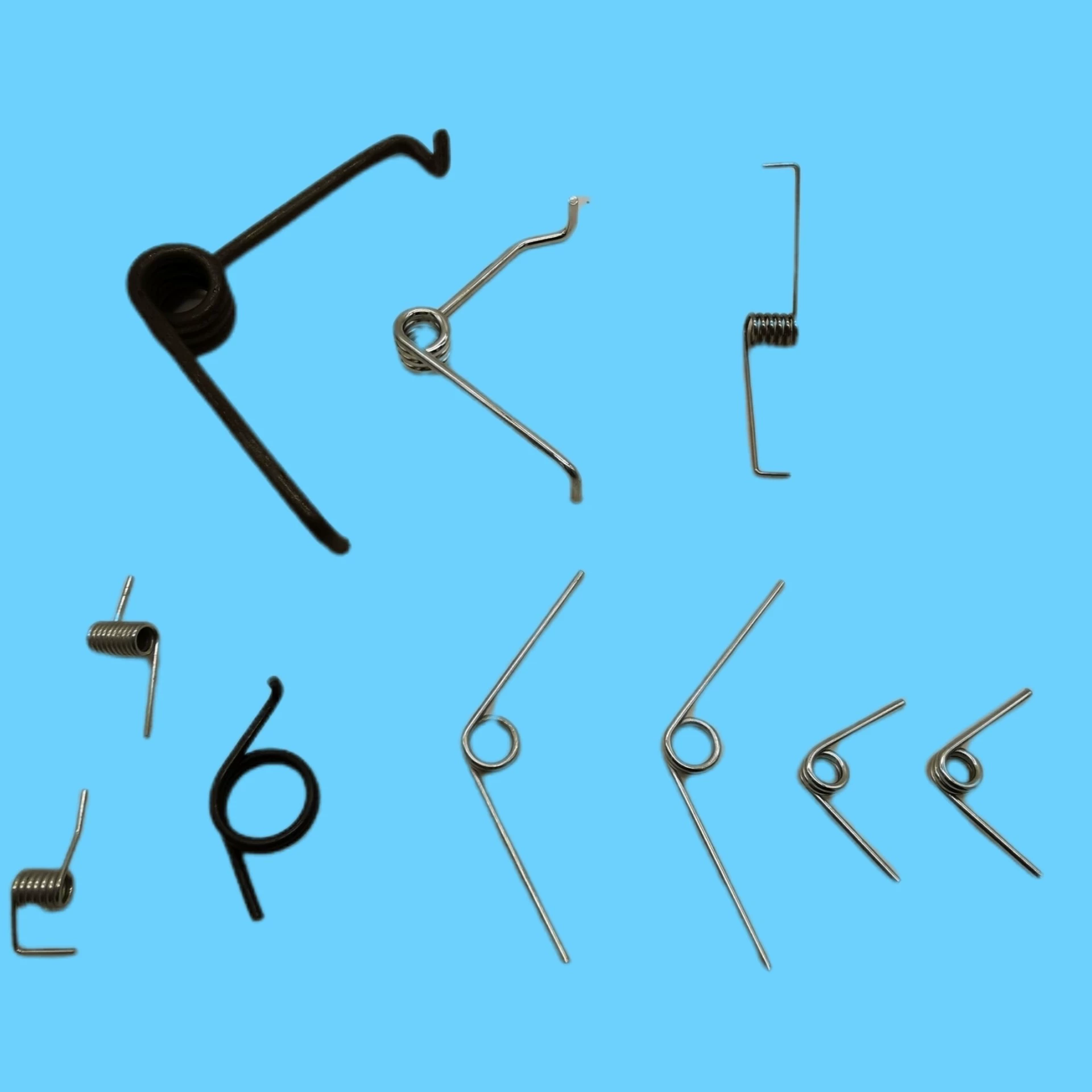
Torsion springs exert torque when twisted around their axis. They can be single or double, with straight legs or special bends. They’re found in clothespins, mousetraps, and door hinges. Double torsion springs provide balanced torque in limited space. For high-torque, low-space applications, flat-wire torsion springs are an option.
Flat Springs and Leaf Springs
Flat springs are stamped or formed from strip metal and deflect in bending. They include cantilever springs, curved washers, and spring clips. Leaf springs are a specific type of flat spring used in vehicle suspensions, available as single or multi-leaf. They offer high load capacity and durability but require significant space.
Wave Springs and Washers
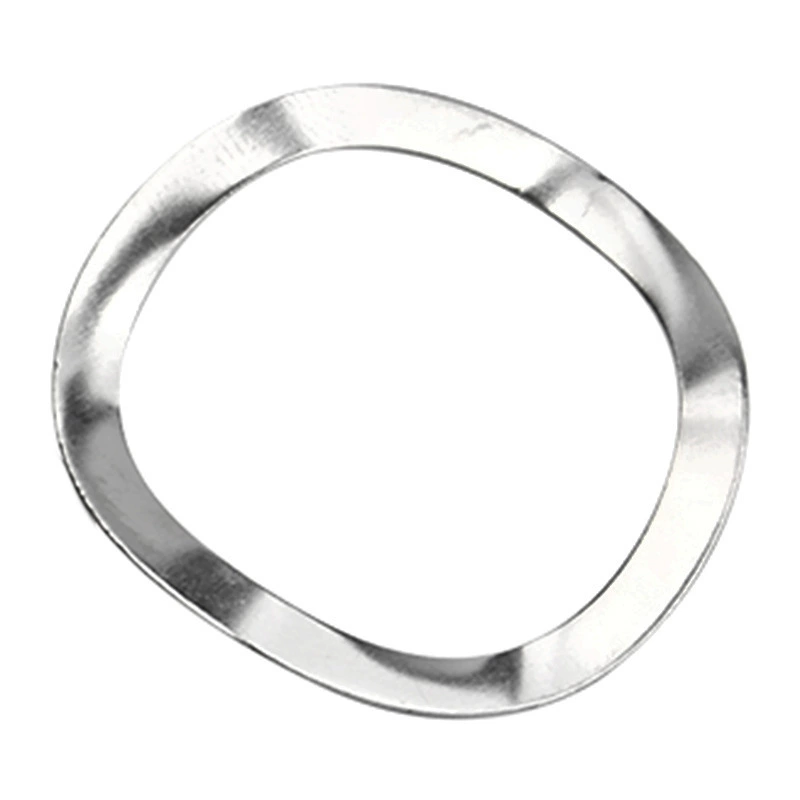
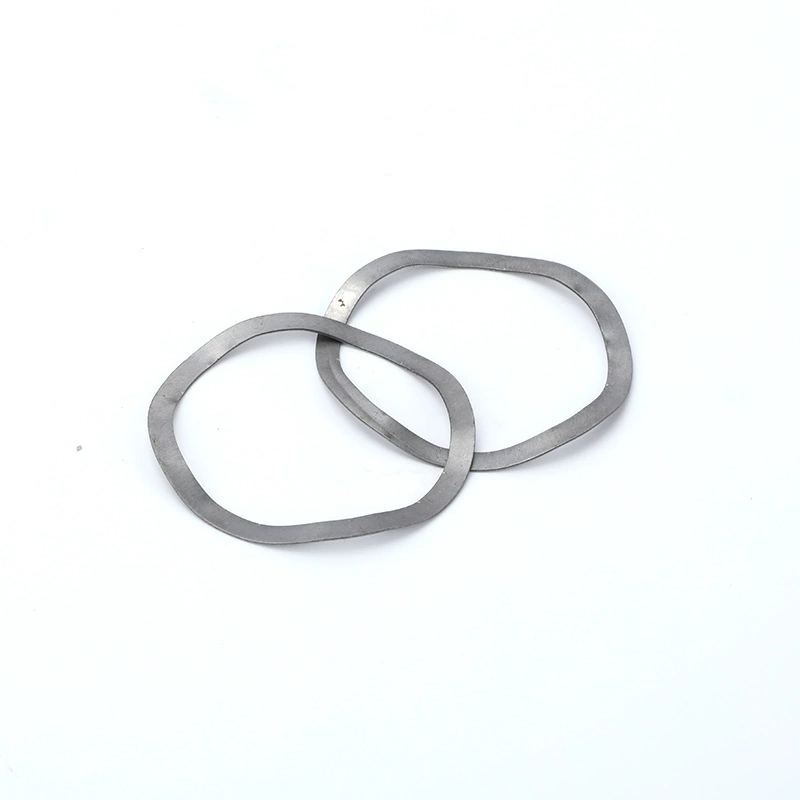
Wave springs are formed from flat wire into a wavy shape, offering a low-profile alternative to coil springs. They come in single-turn, multi-turn, and nested configurations. Wave washers are similar but used as preload devices under bolts. These are ideal for applications with limited axial space, such as bearing preload and valve actuation.
Disc Springs (Belleville Washers)
Disc springs are conical washers that can be stacked to achieve a desired load-deflection curve. They offer high force in a small space and are used in bolted joints, clutches, and safety valves. They can be arranged in series, parallel, or combinations to fine-tune the rate.
Specialty Springs
Beyond these, there are constant force springs, power springs, garter springs, and canted coil springs, each serving niche purposes. For example, constant force springs provide a near-constant load over a long deflection, ideal for retractors and counterbalances.
How to Choose Between Compression, Extension, Torsion, Coil, Flat, Disc, Wave, and Clip Forms
The selection process starts with three questions: What is the direction of the load? How much space is available? What is the required motion?
- Load direction: If the load is axial push, consider compression springs or disc springs. If it’s axial pull, extension springs. If it’s rotational, torsion springs. If it’s lateral or bending, flat springs or leaf springs.
- Space envelope: Measure the available height, diameter, and length. For tight axial spaces, wave springs or disc springs are better than coil springs. For long travel, a coil spring may be necessary.
- Motion type: Linear motion typically uses compression or extension springs. Rotational motion uses torsion springs. For oscillating or vibrating loads, consider the fatigue life of the spring material.
Also consider the required spring rate. A linear rate is standard, but if you need a progressive rate, you might choose a variable-pitch compression spring or a conical spring. For a constant force, a constant force spring is appropriate.
For electrical contact applications, battery coil contact springs or battery flat contact springs are specialized forms that ensure reliable connectivity.
Application Fit: Load, Space, Motion, Environment, and Assembly
Each application brings its own set of constraints. Load requirements dictate the spring rate and free length. Space constraints may force you to choose a wave spring over a coil spring. Motion type—linear, rotational, or oscillating—determines the spring form. Environmental factors like temperature, corrosion, and fatigue life influence material selection. Assembly constraints, such as how the spring is installed, may require special ends or hooks.
For example, in a valve application, you need a spring that can operate at high temperatures and millions of cycles. In a medical device, you might need a spring made from a biocompatible material. In a consumer product, cost and ease of assembly are critical. Always consider the operating environment: moisture, chemicals, and temperature extremes can affect spring performance.
Also think about how the spring will be mounted. Compression springs need flat, parallel seating surfaces. Extension springs need secure attachment points. Torsion springs need to be wound in the correct direction. If space is extremely tight, micro extension springs or micro torsion springs might be the answer.
Common Selection Mistakes That Lead to Poor Performance
- Ignoring buckling: Compression springs that are too long relative to their diameter can buckle. Use a guide rod or choose a different spring form.
- Overlooking initial tension: Extension springs have initial tension that affects the load at zero deflection. If not specified, the spring may not perform as expected.
- Misjudging space: Not accounting for the solid height of a compression spring or the extended length of an extension spring can cause assembly issues.
- Choosing the wrong material: Using a standard spring steel in a corrosive environment leads to failure. Consider stainless steel or other alloys.
- Forgetting about fatigue: If the spring cycles millions of times, you need to design for fatigue life, which may require shot peening or different wire diameter.
- Not considering tolerances: Springs are manufactured with tolerances. If your design is too tight, you may need custom springs with tighter tolerances, which can increase cost.
Another common mistake is assuming that a standard catalog spring will fit. Custom springs are often necessary to meet exact load and space requirements. Working with a spring manufacturer early in the design process can help you avoid these pitfalls.
Next Steps: From Selection to Custom Spring Design
Once you’ve narrowed down the spring type, the next step is to get detailed engineering data. Our contact leaf springs page provides an example of how we present product specifications. For a broader overview, explore our spring clips category to see the variety of forms available.
If you need help with material selection, refer to our material pages. For design guidelines, check our Spring Guide. When you’re ready to move forward, submit an RFQ with your drawings and specifications. Our engineers will review your application and recommend the optimal spring design.
| Spring Type | Load Direction | Typical Applications | Key Selection Criteria |
|---|---|---|---|
| Compression | Axial push | Valves, suspensions, electrical contacts | Space for solid height, buckling risk |
| Extension | Axial pull | Garage doors, trampolines, counterbalances | Initial tension, hook design |
| Torsion | Rotational | Clothespins, hinges, door mechanisms | Torque, leg configuration, wind direction |
| Flat/Leaf | Bending | Vehicle suspensions, electrical contacts | Mounting, load distribution |
| Wave | Axial push | Bearing preload, valve actuation | Low installed height, force per turn |
| Disc | Axial push | Bolted joints, clutches, safety valves | Stacking arrangement, load-deflection curve |
| Constant Force | Linear pull | Retractors, counterbalances | Constant load over long travel |
Every spring application is unique. By understanding the fundamental differences between spring types and considering your specific constraints, you can make an informed decision. If you’re unsure which spring type is best for your project, our engineering team is ready to review your drawings and provide a recommendation. Contact us to discuss your custom spring requirements.
Frequently Asked Questions
What is the difference between a compression spring and a wave spring?
A compression spring is a helical coil that resists axial compressive forces, while a wave spring is a flat wire formed into waves. Wave springs typically require less axial space than coil springs for the same deflection and force, making them ideal for compact assemblies.
How do I choose between a torsion spring and a spiral torsion spring?
A torsion spring exerts torque when twisted around its axis, while a spiral torsion spring (clock spring) stores energy by coiling a flat strip. Choose a torsion spring for limited angular deflection and a spiral torsion spring for multiple turns and constant torque over a large angle.
When should I use a disc spring instead of a coil spring?
Disc springs (Belleville washers) are best when you need high force in a very small axial space, such as in bolted joints or clutch assemblies. They can be stacked to achieve different load-deflection characteristics, offering more design flexibility than a single coil spring in tight spaces.
What are the main considerations for extension spring hook design?
Hook design affects how the spring attaches to other components and its stress concentration. Full loops are stronger than extended hooks. The hook orientation and position must align with the assembly, and the initial tension of the spring must be specified to ensure proper load at zero deflection.
Why is material selection critical for custom springs?
Material affects spring rate, maximum stress, fatigue life, and corrosion resistance. For high temperatures or corrosive environments, stainless steel or specialty alloys may be required. The wrong material can lead to premature failure, so it’s essential to match the material to the operating conditions.
Spring Products for This Guide
Open a product to review its geometry and the information needed for a custom quote.
- Axial Canted Coil SpringsGarter & Canted Coil Springs — geometry and quotation requirements
- Battery Coil Contact SpringsFlat Springs & Stampings — geometry and quotation requirements
- Coiled Spring Pins – Heavy DutyWire Forms — geometry and quotation requirements
- Conical Compression SpringsCompression Springs — geometry and quotation requirements
- Continuous-Length Extension SpringsExtension Springs — geometry and quotation requirements
- Crescent / Curved Spring WashersSpring Washers — geometry and quotation requirements