
For product selection, compare Compression Springs, Extension Springs, Torsion Springs.
Key Takeaways
- Spring rate (k) is the load per unit deflection and is critical for custom spring performance.
- The round-wire helical spring rate formula is k = (G*d^4)/(8*D^3*n_a), showing high sensitivity to wire diameter and coil diameter.
- Accurate calculation requires complete inputs: dimensions, material, load, travel, cycle life, and environment.
- Design trade-offs include wire diameter vs. outside diameter, number of coils vs. free length, and material selection.
- Providing comprehensive data in an RFQ helps engineers design the correct spring and avoid costly iterations.
You are at your desk, staring at a compression spring that collapsed after a few thousand cycles. The drawing says the spring rate is correct, but the load at working height is off, and the part is binding. The root cause is often not the spring itself, but the way the spring rate was calculated—or the inputs used for that calculation.
Spring rate is the single most important number in custom spring design. It defines the relationship between load and deflection, and it drives everything from free length to material selection. This guide explains the spring rate formula, the engineering relationships behind it, and the inputs you need before you calculate—or before you send an RFQ.
What Is Spring Rate and Why It Matters
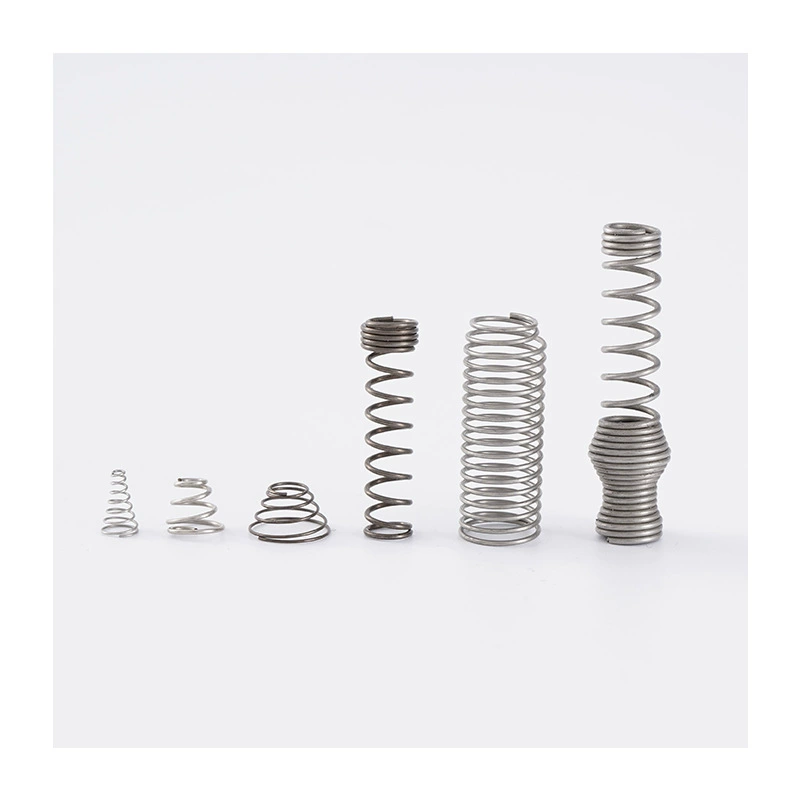
Spring rate (k) is the amount of load required to deflect a spring by one unit of distance. For compression and extension springs, it is expressed in pounds per inch (lbf/in) or newtons per millimeter (N/mm). For torsion springs, the analogous value is torque per degree of rotation. A linear spring has a constant rate, meaning the load increases proportionally with deflection. A progressive spring has a variable rate, which increases as the spring compresses.
In custom spring design, spring rate determines whether a mechanism will perform its function—whether it is a valve spring controlling engine timing, a wave spring preloading a bearing, or a contact spring maintaining electrical continuity. If the rate is wrong, the spring will not deliver the required force at the working height, and the system will fail.
Key Formulas and Engineering Relationships
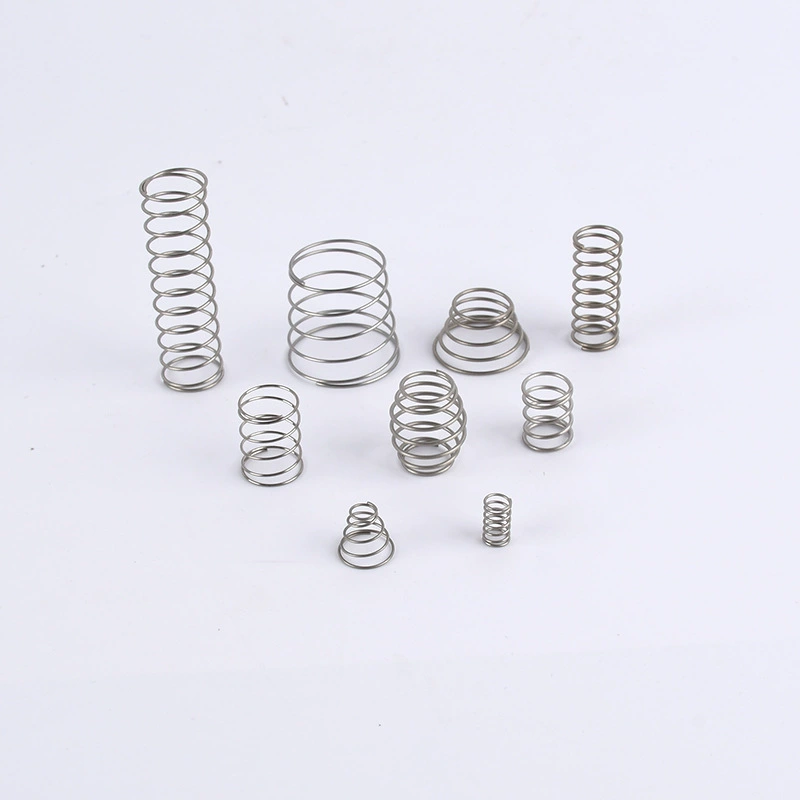
For a round-wire helical compression spring, the basic spring rate formula is:
k = (G × d^4) / (8 × D^3 × n_a)
Where:
- k = spring rate (lbf/in or N/mm)
- G = shear modulus of the material (psi or MPa)
- d = wire diameter (in or mm)
- D = mean coil diameter (in or mm)
- n_a = number of active coils
This formula shows that spring rate is highly sensitive to wire diameter (to the fourth power) and mean coil diameter (to the third power). Small changes in these dimensions produce large changes in rate. For example, increasing wire diameter by 10% increases the rate by about 46%, assuming other factors stay constant. Decreasing the mean coil diameter by 10% increases the rate by about 37%.
For extension springs, the same formula applies, but the number of active coils includes the body coils only; the hooks are not counted. For torsion springs, the rate is calculated differently, using the wire diameter, coil diameter, number of coils, and the bending modulus of the material.
For flat springs, such as cantilever or leaf springs, the rate depends on the geometry of the beam, the modulus of elasticity, and the moment of inertia. The formulas are different from round-wire springs, and they are covered in the Spring Guide on this site.
Inputs Engineers Need Before Calculation
Before you can calculate spring rate, you need to define the following inputs:
- Dimensions: Wire diameter, outside diameter, inside diameter, mean coil diameter, free length, and number of active coils. For extension springs, also hook geometry. For torsion springs, leg lengths and positions.
- Material: The shear modulus (G) or elastic modulus (E) depends on the material and its condition. Common materials include music wire, oil-tempered chrome silicon, stainless steel, and beryllium copper. Material selection affects not only the modulus but also the allowable stress and corrosion resistance.
- Load and deflection: You need to know the required load at one or more working heights, or the deflection range. The spring rate is the slope of the load-deflection curve.
- Travel: The total deflection from free length to solid height (for compression springs) or to maximum extension (for extension springs).
- Cycle life: The number of cycles the spring must endure. This affects the allowable stress and the need for presetting or shot peening.
- Environment: Temperature, humidity, chemicals, and other factors that may affect material properties and corrosion resistance.
If you do not have all these inputs, you cannot calculate an accurate spring rate. In that case, you may need to work with a spring manufacturer to determine the appropriate dimensions and material for your application.
Design Trade-offs and Warning Signs
Spring rate is not an isolated parameter; it interacts with other design factors. Here are some trade-offs to consider:
- Wire diameter vs. outside diameter: Increasing wire diameter increases the rate but also increases stress and may require a larger outside diameter to maintain the same inside diameter. If the spring must fit in a tight bore, you may need to use a smaller wire diameter and more coils to achieve the desired rate.
- Number of coils vs. free length: More active coils reduce the rate but increase the solid height and free length. If the spring must fit in a limited space, you may need to use fewer coils and a higher rate, or consider a different spring type.
- Material selection: Higher-strength materials allow higher stresses and smaller wire diameters, but they may be more expensive or less corrosion-resistant. The shear modulus also varies with material, affecting the rate.
- Progressive rate vs. linear rate: If you need a constant force over a range of deflection, a linear rate is appropriate. If you need increasing resistance as the spring compresses, a variable-pitch or variable-diameter spring may be better.
Warning signs that your spring rate calculation may be wrong include:
- The spring binds before reaching the required deflection.
- The load at working height is higher or lower than specified.
- The spring takes a set (permanent deformation) after initial loading.
- The spring rate changes over time due to fatigue or stress relaxation.
If you see these signs, recheck your inputs and calculations, or consult an experienced spring engineer.
When to Use the Spring Guide, Calculators, or Reference Data
Calculating spring rate by hand is possible, but it is error-prone. The site offers a Spring Guide with reference data, formulas, and design guidelines. You can also use online spring calculators, but be aware that they may use simplified formulas that do not account for all factors, such as end conditions, residual stresses, or operating temperature.
For standard spring types, such as compression springs, extension springs, or torsion springs, the catalog pages provide dimensions and rates for off-the-shelf parts. If your requirements are close to a standard part, you may not need a custom design. However, if you need a specific rate, load, or dimension that is not available, you will need a custom spring.
For specialized spring types, such as crest-to-crest wave springs or constant force springs, the design formulas differ significantly from round-wire helical springs. In those cases, rely on the manufacturer’s engineering data or consult with their engineers.
How to Prepare Data for a Custom Spring Design/RFQ
When you are ready to request a custom spring, you need to provide enough information for the manufacturer to design and produce the spring. At a minimum, you should include:
- Application: Describe what the spring does, the operating environment, and any space constraints.
- Dimensions: Provide the available space for the spring (e.g., bore diameter, rod diameter, maximum length). If you have a drawing, include it.
- Load and deflection: Specify the required load at one or more working heights, or the spring rate and free length.
- Material: If you have a material preference, state it. Otherwise, the manufacturer can recommend a material based on your application.
- Cycle life: Indicate the expected number of cycles and the frequency of operation.
- End conditions: For compression springs, specify the end type (closed and ground, closed not ground, etc.). For extension springs, specify the hook type.
- Tolerances: If you have specific tolerance requirements, include them. Otherwise, standard tolerances may apply.
Providing this information upfront will speed up the design process and reduce the risk of misunderstandings. The manufacturer’s engineers can then calculate the exact spring rate and dimensions, and confirm that the spring will meet your requirements.
Consolidated Overview: Spring Rate Design at a Glance
| Aspect | Key Points | Action |
|---|---|---|
| Definition | Load per unit deflection; linear or progressive | Determine required rate from load-deflection curve |
| Formula | k = (G*d^4)/(8*D^3*n_a) for round-wire helical springs | Use accurate dimensions and material modulus |
| Inputs | Dimensions, material, load, travel, cycle life, environment | Gather all data before calculation |
| Trade-offs | Wire diameter vs. OD, coils vs. length, material strength vs. cost | Balance conflicting requirements |
| Warning signs | Binding, incorrect load, set, rate change | Recheck calculations or consult engineer |
| Resources | Spring Guide, calculators, catalog pages, manufacturer engineers | Use available tools and expertise |
| RFQ preparation | Application, dimensions, load, material, cycle life, end conditions | Provide complete data for accurate design |
Spring rate is a fundamental parameter in custom spring design. By understanding the formula, gathering the right inputs, and being aware of trade-offs, you can avoid common pitfalls. When in doubt, use the reference data and engineering support available on this site.
If you have a spring design that requires a specific rate, contact us to review your drawing and requirements. Our engineers can confirm the design and provide a quotation for your custom spring.
Frequently Asked Questions
What is the spring rate formula for a compression spring?
For a round-wire helical compression spring, the formula is k = (G × d^4) / (8 × D^3 × n_a), where G is the shear modulus, d is wire diameter, D is mean coil diameter, and n_a is the number of active coils. This formula gives the linear spring rate in units of force per deflection.
How do I calculate spring rate if I only know the load at a certain deflection?
If you have a load-deflection point, the spring rate is simply the load divided by the deflection from free length. However, you need to know the free length and ensure the spring is linear. For accurate design, provide the load at two different heights to determine the rate.
What is the difference between spring rate and spring constant?
Spring rate and spring constant are often used interchangeably. Both refer to the stiffness of a spring, defined as the change in load per unit change in deflection. In engineering, spring rate is the standard term for helical springs, while spring constant is a more general term.
Why does wire diameter affect spring rate so significantly?
In the spring rate formula, wire diameter is raised to the fourth power, so even small changes have a large impact. A 10% increase in wire diameter increases the rate by about 46%, assuming other dimensions remain constant. This is why precise wire diameter control is critical in manufacturing.
What information should I include in a custom spring RFQ to get an accurate spring rate?
Include the application, space constraints (bore, rod, length), required load at working heights, deflection range, material preference, cycle life, and end conditions. Providing these details allows the manufacturer to calculate the exact spring rate and design a spring that meets your needs.
Spring Products for This Guide
Open a product to review its geometry and the information needed for a custom quote.
- Conical Compression SpringsCompression Springs — geometry and quotation requirements
- Continuous-Length Extension SpringsExtension Springs — geometry and quotation requirements
- Double Torsion SpringsTorsion Springs — geometry and quotation requirements
- Continuous-Length Compression CoilsCompression Springs — geometry and quotation requirements
- Convex Compression SpringsCompression Springs — geometry and quotation requirements
- Cross-Over Loop Extension SpringsExtension Springs — geometry and quotation requirements